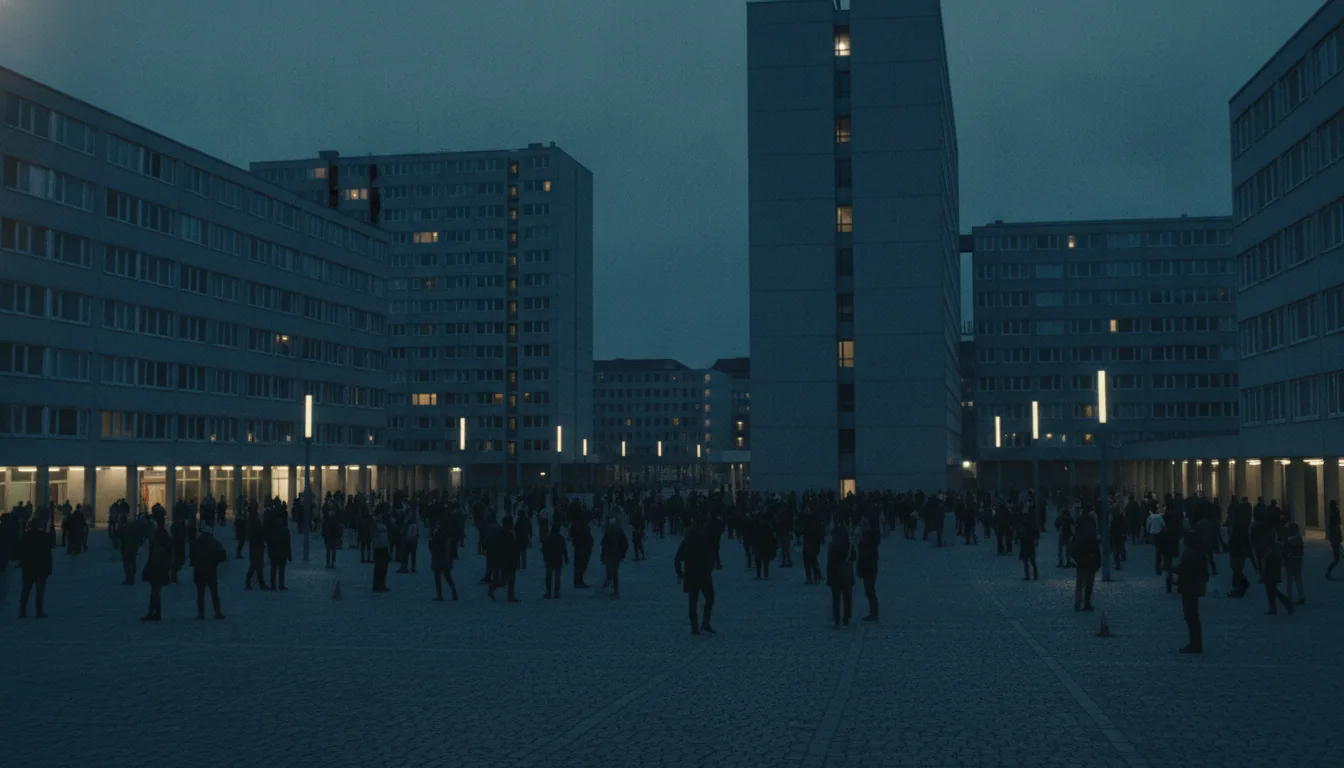
The Day Spain Stopped
On November 11, 2026, Spain's trains didn't run, its ports didn't load, and hundreds of flights sat empty on the tarmac. For the first time in 14 years, the country went on general strike — and unlike the last time, the central demand wasn't wages. It was rent.
The last time Spain did this was 2012, in the depths of austerity cuts that gutted public services and pushed unemployment past 25%. Whatever came after that — recovery, growth, EU funds — apparently wasn't enough. Because here they are again.
The numbers from Tuesday are blunt. Industrial and port workers walked out at 90% participation. Energy sector workers hit 75%. Waste management reached 82%. These are not symbolic numbers. These are numbers that stop things from moving.
Transport felt it most visibly. Rail workers had already walked out a day earlier, citing aging infrastructure and a string of recent accidents. By strike day, Barcelona's metro was running at 25% capacity. Hundreds of flights were cancelled, with only 39 to 64% of international routes operational depending on the airport. If you needed to be somewhere in Spain on November 11, you probably weren't getting there.
The coalition behind the strike is what makes it different from 2012. Back then it was the two big unions — UGT and CCOO — pulling workers out over wage cuts and labor reforms. This time they organized alongside the Sindicato de Inquilinas, the Tenants' Union. Labor and housing, shoulder to shoulder. That is not a small shift. It tells you something about what has broken down and for whom.
The strike's organizers estimated five million participants across the country. Whether that figure holds under scrutiny, the message was hard to miss.
The Number That Explains the Housing Crisis
Average monthly rent in Spain now stands at 1,176 euros. That figure comes from the Consejo de la Juventud de España, the Spanish Youth Council, which tracks what housing costs relative to what workers actually earn. It is not an abstract statistic. It is the number that made November 11 inevitable.
For a young Spanish worker on an average net salary, that rent consumes 98.7 percent of their monthly income. Not a rough estimate. An arithmetic fact. Pay the rent, and you have thirteen euros left for food, transport, utilities, and everything else a person needs to survive a month. The math does not balance because the math cannot balance.
In Madrid and Barcelona, the picture extends beyond young people. Tenants across all age groups are projected to spend 74 percent of their income on housing alone. That leaves 26 cents of every euro for groceries, heating, school supplies, medical bills, and anything that breaks down. When housing takes that share, every other spending decision becomes a kind of triage.
This is what policy feels like when it fails over a decade: not a sudden collapse but a slow arithmetic suffocation, one rent increase at a time. A family does not stop eating all at once. They stop buying the more expensive bread first, then the meat, then the school trip. The housing crisis did not announce itself. It arrived quietly, in monthly bank transfers, until one day the numbers simply stopped working.
The Spanish Youth Council's data makes visible what millions of households had already calculated at their kitchen tables: when rent costs nearly everything you earn, the question is no longer whether people will protest — only how long they waited.
How You Build a Movement Out of a Shortage
Spain is short 750,000 housing units right now. Not in some future projection, not according to an advocacy group with an interest in alarming you — according to the Bank of Spain, which also projects that number will pass one million by 2028 if construction and policy stay on their current path. That is the foundation of this movement: a physical, countable absence of homes.
Numbers that large are easy to ignore. Maricarmen Abascal was not.
She was 87 years old and had lived in her home for 70 years when she was evicted. She died in a hospital shortly after. Her story traveled fast — across the tenant networks, through social media, into the conversations people were already having about rent consuming nearly every euro they earned. A shortage of 750,000 units is a statistic. Maricarmen Abascal is a name. Movements need both.
The camps at Puerta del Sol in Madrid carry a deliberate echo of 2011. The 15-M "Indignados" movement filled those same squares with people who felt the system had stopped working for them. The comparison is not accidental — organizers from that generation helped build what exists today. But there is a difference. In 2011, the anger was about austerity and corruption in the abstract. This time it is about a specific, measurable thing: there are not enough homes, and the ones that exist cost more than people can pay.
That specificity matters. It is harder to dismiss a housing deficit than a mood. When UGT, CCOO, and the Sindicato de Inquilinas marched together on November 11, they were not protesting a feeling. They were protesting a number.
What the Strikers Are Actually Demanding
The list is short. Ban Airbnb and all short-term tourist rentals. Cap rents by law. Build social housing fast enough to matter. These are not vague aspirations — they are specific demands with specific targets.
The logic behind targeting Airbnb is simple arithmetic. Every flat converted to a tourist rental is one fewer flat for a family to rent. In Madrid and Barcelona, landlords earn more from a week of tourists than a month of tenants. So platforms like Airbnb are not a side issue; they are a direct mechanism of displacement. The strikers want them banned entirely.
Strict rent caps would do what the market has refused to do: set a ceiling. For tenants, that means knowing what next year looks like. For landlords who bought property as a speculative investment rather than a home, it means the calculation changes.
What is new here is who is marching together. UGT and CCOO, Spain's two largest traditional labor unions, organized this strike alongside the Sindicato de Inquilinas, the Tenants' Union. Labor unions exist to fight for wages; tenant unions exist to fight for shelter — the fact that they are now coordinating means that survival costs have become a collective bargaining issue.
The Tenants' Union claims five million people participated in November 11 actions. With parliamentary elections eighteen days away, that number is not just a protest statistic. It is a voter count.
The Election Nobody Planned For
Pedro Sánchez did not plan to call an election this autumn. He planned to pass tenant protection legislation. When parliament killed those bills, he had no legislative agenda left standing, and on November 11 he announced early elections for November 29.
That sequence matters. This is not a government brought down by a budget crisis or a corruption scandal. It was brought down by housing. That is new. It is worth sitting with.
Compare it to 2012, the last time Spain had a general strike. The fight then was about wages, austerity, the troika. The unions marched against cuts to salaries and public services. Fourteen years later, the same unions marched again, but this time they marched alongside the Tenants' Union. The central grievance had shifted from what you earn to what you can afford to live in.
The generational dimension is not subtle. When rent consumes 98.7% of a young person's average salary, housing stops being a lifestyle question and becomes a ballot question. A generation that cannot afford a lease is not thinking about pension reform or trade policy. They are thinking about whether November 29 produces a government that will actually cap rents or one that will study the problem for another decade.
What nobody can say yet is whether the government's 10-billion-euro housing package will reach a parliamentary vote before polling day. If it does, Sánchez can claim he acted. If it doesn't, the strike becomes the last thing voters remember about his government. That is a narrow corridor to walk through in eighteen days.
Ten Billion Euros and What It Buys
The Spanish government's response to the strike was a 10-billion-euro housing package: interest-free loans for buyers, tax breaks for landlords who offer long-term contracts. The number is large enough to sound serious.
Whether it is proportionate is a different question. Spain currently faces a shortage of 750,000 units. The Bank of Spain projects that figure will pass one million by 2028. Ten billion euros spread across a deficit that size works out to roughly 10,000 euros per missing unit, in a country where average monthly rent has already reached 1,176 euros. Do the arithmetic.
Other countries have tried harder and learned something from it. Vienna's municipal social housing model keeps roughly 60% of the city's population in subsidized apartments, suppressing rents across the whole market. Rent control in Berlin produced mixed results but kept vulnerable tenants housed during the transition. The common thread is public ownership at scale, not loans and tax incentives that depend on private actors choosing to cooperate.
The practical question every Spanish renter is asking is simpler: will any of this arrive before my next lease renewal? The package was announced before the election on November 29. Whether it passes, and what form it takes after a vote, is still open. Tax breaks move slowly. Construction moves slower.
Spain's general strike has put the housing crisis at the center of an election nobody planned for — and the units people need most are not investment vehicles. They are homes. That distinction is the only place where this crisis ends.