A Tap of Hot Water at the End of the Server Room
At the University of Southern Denmark, a supercomputer called Bitten generates heat with every calculation it runs - and wastes none of it. Using liquid cooling, the facility recovers 100% of its waste heat, feeding it directly into the building's heating infrastructure. No smoke, no rooftop vents dumping warmth into the sky.
The physics here is not subtle: up to 97% of every watt a data center consumes converts to heat. That figure sits at the core of everything that follows in this story. A building full of servers is, structurally, a boiler - one that happens to also process payroll and train AI models.
The shift that makes recovery practical is the move from air to liquid cooling. Air-cooled racks vent heat at temperatures too low and too diffuse to capture usefully. Liquid-cooled GPU racks running AI workloads are different: they produce waste heat at 55°C to 65°C, which sits squarely in the range that district heating networks can use without further upgrading. Kristian Strand, an engineer at Danfoss Climate Solutions, described the result plainly: "At the end of the process you basically have a tap of hot water coming out of the data center."
That phrase is worth pausing on. Not a byproduct to manage. Not an emission to offset. A tap of hot water - a resource with a buyer, a price, and a pipe to carry it somewhere useful. The concept is proven. The question now is whether it scales.
Why the Numbers Make This Worth Taking Seriously
Data centers consumed 485 terawatt-hours of electricity in 2024. That is roughly 1.5% of all electricity generated on Earth - about the same as the entire country of France. By 2030, as AI workloads multiply, the International Energy Agency projects that share will double to 3%. The raw scale of that growth is what turns server waste heat from a curiosity into a strategic question.
The second number worth sitting with is PUE: Power Usage Effectiveness. It measures how much total energy a facility draws compared to the energy actually used for computing. A perfect score is 1.0 - every joule goes to the processor. The industry average today is 1.6, which means 60% more energy is consumed than the computing work strictly requires. Modern facilities like Greenergy Data Center in Hüüru already operate at 1.2. That gap between 1.2 and 1.6 is not a rounding error - it represents a recoverable resource that the best operators are already capturing and the rest are still venting to the sky.
The scale check matters here. Up to 97% of a data center's electricity eventually becomes heat. A single 20 MW AI facility generates roughly 150 GWh of thermal energy annually - enough to warm an entire urban district. That's not a gesture. That's a lever. The question is no longer whether the physics work. The question is whether the pipes, contracts, and planning decisions will.
The Technology Gap — and How Liquid Cooling Closes It
The core problem is physics. Standard air-cooled server rooms exhaust heat at 25 to 40 degrees Celsius. That temperature is too low to feed directly into a district heating network, which typically needs water warmer than 60 degrees. To bridge the gap, operators must install industrial heat pumps, an extra capital cost that makes the economics significantly harder to justify.
Liquid cooling changes the equation. Instead of blowing warm air into the ceiling, coolant circulates directly across the chip surfaces and exits the loop at 55 to 65 degrees, hot enough to connect straight to municipal pipes. At that temperature, the recovered thermal energy carries real market value: estimates put the sale price at 25 to 45 euros per megawatt-hour to network operators. The heat pump step disappears, and so does one of the main arguments against the whole idea.
The economic model shift is worth stating plainly: air cooling produces a liability, while liquid cooling produces an asset that can be invoiced. That difference, not any green credential, is why operators are switching.
The storage problem is harder. District heating demand drops in summer, but servers run year-round. One answer under development is concrete thermal batteries - Lehigh University has demonstrated units that can hold recovered heat at temperatures up to 500 degrees Celsius, enough to buffer seasonal gaps and serve industrial processes that air conditioning could never reach. The technology is still early-stage, but it points toward a system where data centers do not just supply residential heat in winter. They become flexible thermal infrastructure, available whenever the demand exists.
Who Is Already Doing It — and What the Results Show
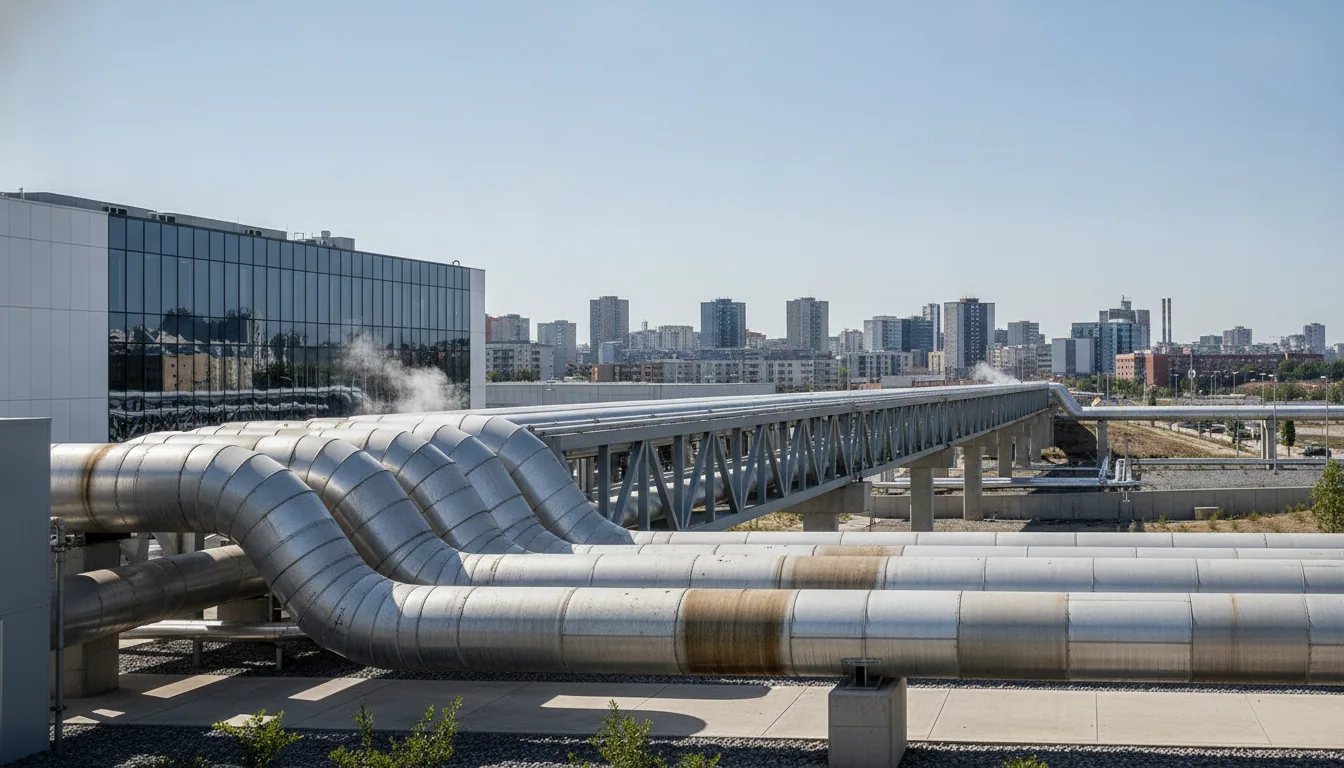
Walk the district heating pipes of Sonderborg, Denmark, and you eventually trace them back to a server room. Some 75,000 residents there receive warmth partly generated by Danfoss liquid cooling systems pulling heat off data center racks. As Kristian Strand from Danfoss puts it: at the end of the process, you basically have a tap of hot water coming out of the data center. That is the mundane reality of what sounds like an exotic concept.
Finland took the same logic and scaled it. Telia's Helsinki data center is targeting 90% heat reuse by 2025, with enough recovered thermal energy to warm 28,000 apartments. That is not a pilot. It is a neighborhood.
The building type does not need to be a housing block to work. At the Hyatt Regency Dallas, a company called Watter fitted the hotel's server infrastructure with a heat recovery platform that converts waste heat directly into the building's hot water supply, reducing natural gas consumption. James Hancock, Watter's CEO, described the logic plainly: "When most people look at a hotel, they see a hospitality asset. We see infrastructure hiding in plain sight." Hotels already carry electrical capacity, physical space, and steady hot water demand. The energy conversion is already halfway solved by the building's own requirements.
Three geographies, three building types: a university supercomputer, a telecom data center, a commercial hotel. The model is not locked to Scandinavia, to large operators, or to purpose-built district heating cities. The pattern is the same wherever the pipes run close enough to the racks.
A single 20 MW AI facility generates roughly 150 GWh of thermal energy annually - enough to warm an entire urban district.
Estonia's Calculated Bet: AI Factories as Heating Infrastructure
Gas has heated Tallinn for decades. The plan now is to replace a significant slice of it with server racks. Estonia's Climate Ministry has set a concrete target: natural gas below 10% of Tallinn's district heating by 2027. Data center waste heat is not a footnote in that strategy. It is one of the load-bearing walls.
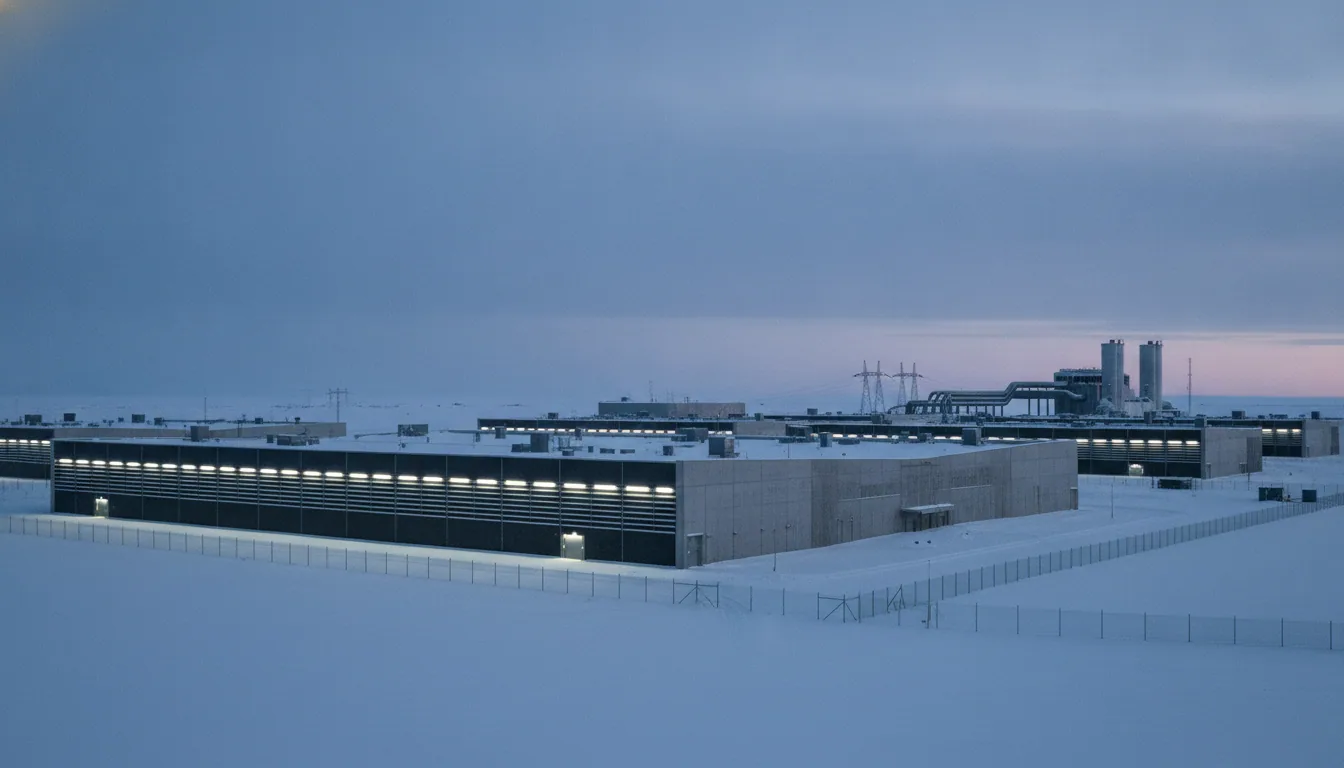
The project anchoring the bet is Greenergy Data Centers' facility in Hüüru, currently operating at 31.5 MW connection capacity with a credible roadmap to 200 MW, making it the largest data center in the Baltics. The first stage, a 6 MW load, is projected to deliver roughly 50 GWh of heat annually. That is a real number, not a whitepaper estimate. For comparison, it is enough to take meaningful pressure off the gas network, and the facility has barely started filling its footprint.
The more striking addition arrives in 2026. Nebius, an AI company, is integrating a 22 MW factory directly into Hüüru. Model a 20 MW IT load through liquid cooling and the thermal output reaches approximately 150 GWh per year - enough to heat Tallinn's entire Õismäe district. Nebius is not a pilot project; it is a production AI workload whose economics already work without the heat revenue. The heat is a co-product, not a premise.
Utilitas, Estonia's largest district heating operator, completes the loop from server rack to apartment radiator. The comparison worth making is to the alternative: a gas boiler running all winter, owned by a foreign supplier, burning fuel Estonia does not produce. A data center running AI workloads generates revenue, keeps engineers employed, and heats the same buildings. The gas boiler does only one of those things.
The Honest Scorecard: What Works, What Doesn't Yet, and What Data Center Heat Recovery Is Worth Doing
The EU Energy Efficiency Directive now mandates heat reuse for data centers over 1 MW where technically and economically feasible. Regulation is no longer approaching - it has arrived. Operators who have not planned for it are already behind.
Here is what actually works: new liquid-cooled facilities built adjacent to existing district heating grids. Sonderborg proved the physics. GDC Hüüru is proving the scale. When the temperatures come out of GPU racks at 55-65°C and the pipes are close enough to use them, the economics work at 25-45 euros per MWh. That is a real revenue line, not a press release.
Here is what does not work yet. Retrofitting air-cooled legacy centers is expensive, and nobody has published a clean break-even figure. GDC and Tallinn's network operators have not finalized pricing agreements. Summer is an unsolved equation - district heating demand drops, the servers keep running, and without seasonal thermal storage, that heat goes nowhere useful.
The lever is real but it is narrow. It applies to new liquid-cooled facilities in cities that already have district heating infrastructure. It does not apply to every data center, and it does not apply to every geography.
One action is proportionate and time-sensitive: municipalities should zone new data centers adjacent to heating networks now, before pipelines are built in the wrong place. The window for getting the pipes right is short. The cost of getting them wrong - for both energy security and data center waste heat recovery potential - will be paid for decades.