The Day the Largest Merger in History Made Investors Nervous
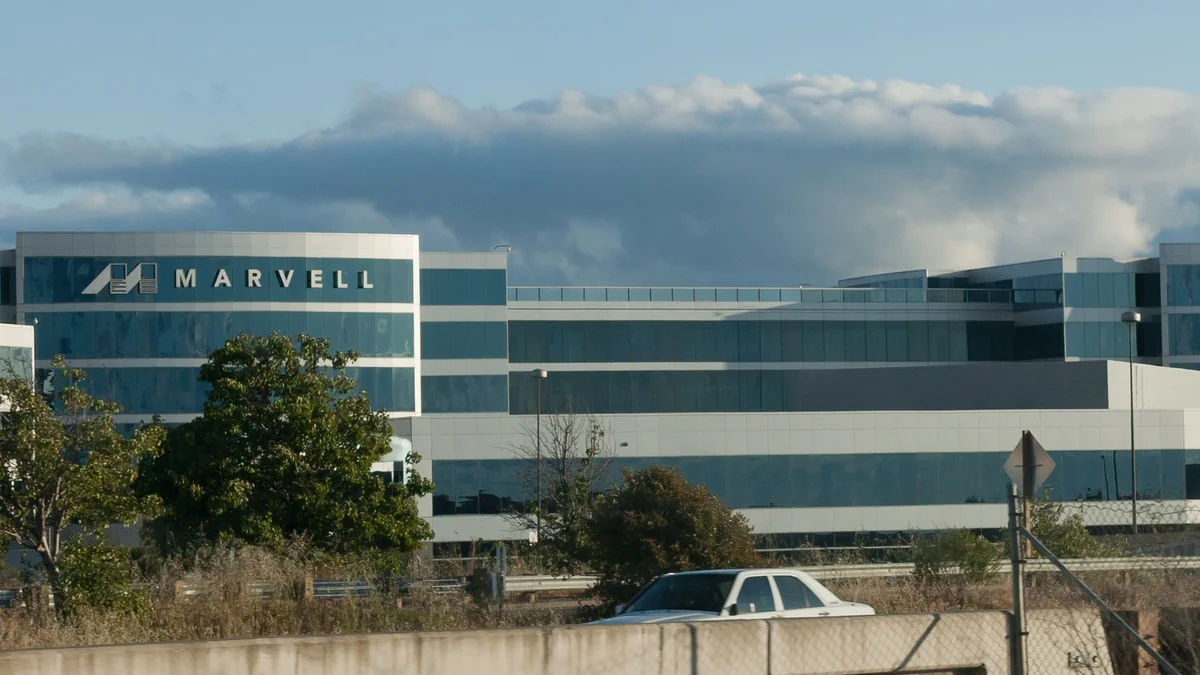
On November 2, 2026, Marvell Technology and Lumentum Holdings announced the largest merger between two publicly traded companies on record — and both stocks fell before trading ended. The Marvell–Lumentum merger is structured as an all-stock definitive agreement implying an enterprise value of $115 billion for Lumentum, with no cash component. Lumentum stockholders will receive 4.500 shares of Marvell common stock for each share held — a ratio encoding a 23.9% premium over Lumentum's unaffected price — yet markets responded as though the price were too high to justify.
Marvell dropped more than 4%. Lumentum fell 10%.
To understand why, consider what Marvell is actually spending. Marvell joined the S&P 500 in June 2026, a milestone that accelerated index-driven capital inflows and contributed to a 120% year-to-date stock appreciation before announcement day. That elevated stock is the acquisition currency here. When a company buys a physical manufacturing and photonics asset using shares that have doubled in under a year, the market's first instinct is to ask whether the premium is real or an artifact of a valuation window.
The skepticism is rational, but it may also be myopic. The institutional behavior of markets in transformational moments rarely maps cleanly onto structural logic. If the deal closes as projected in the first half of 2028, the combined entity will operate in a total addressable market of $550 billion — a figure that reframes the $115 billion entry price as a calculated opening position, not an overpayment.
Anatomy of an All-Stock Deal: Exchange Ratios, Premiums, and Ownership Arithmetic
A merger valued at $115 billion that sends both stocks downward forces a closer look at the mechanics underneath the headline number. At its core, the transaction rests on a fixed exchange ratio: Lumentum stockholders receive 4.500 shares of Marvell common stock for each share they hold, implying a purchase price of approximately $1,132 per Lumentum share based on October 28, 2026 pricing. That precision matters, because in an all-stock deal, the "price" is not locked — it floats with Marvell's share price until close.
The 23.9% acquisition premium over Lumentum's unaffected pre-speculation price is the number acquirers use to justify the transaction to target shareholders. It represents the gap between where Lumentum traded before merger rumors entered the market and what Marvell is effectively offering today. A premium below 25% in a record-setting transaction signals that Marvell's negotiating position was strong, and that Lumentum's board accepted structural logic over pure price maximization.
The ownership split encodes that logic directly. Post-close, Marvell stockholders will hold 67% of the combined entity; Lumentum stockholders will hold 33%. This is not a merger of equals; it is an acquisition dressed in equity clothing. Marvell's stock, up 120% year-to-date before the announcement, functioned as a high-denomination currency, allowing the company to buy physical photonics manufacturing capacity without depleting cash reserves.
The deal is expected to close in the first half of 2028, contingent on stockholder approval from both sides and regulatory clearance. That 18-month window is not an administrative formality. Given the scale and the AI supply chain concentration this combination represents, the gap between signing and closing may prove to be the transaction's most contested terrain.
Why Photons Are Replacing Electrons: The Physics Behind the Strategy
The most sophisticated AI clusters on the planet are being held back by copper wire. That is not a metaphor; it is an engineering constraint. As data centers scale toward trillion-parameter models, the electrical interconnects binding processors together hit a hard ceiling in bandwidth and power efficiency that no incremental improvement in silicon design can overcome.
This is precisely where Lumentum's product line stops being a niche optical supplier and starts being critical infrastructure. Its lasers, optical transceivers, and optical circuit switches (OCS) route data using light rather than electrons, eliminating the conversion bottlenecks that throttle performance in dense AI clusters. If copper is the highway with a weight limit, photonics is the new rail network designed specifically for heavier loads.
Silicon photonics and OCS are not supplementary components. They are the architectural precondition for scaling the next generation of AI systems. The combined company's total addressable market is projected to expand to $550 billion — a figure that only makes sense once you recognize photonics as a structural input, not an accessory upgrade.
The commercial logic follows directly from the physics. Marvell brings the semiconductor design expertise; Lumentum brings the photonic manufacturing capability. Together, they close the vertical gap that neither could bridge alone. The companies project more than $1 billion in annual run-rate cost synergies within two years of closing — a number that signals operational redundancy elimination alongside genuine integration depth.
For entrepreneurs building on AI infrastructure and for policymakers overseeing supply chain resilience, the practical implication is stark. The bottleneck in scaling large AI clusters is no longer compute; it is the speed and efficiency of moving data between chips. The company that controls that optical layer controls the tempo of the entire AI economy. Who else is positioned to contest that ground?
Who controls that optical layer controls the tempo of the entire AI economy.
The Nvidia Variable: When a $4 Billion Strategic Bet Reshapes a Supply Chain
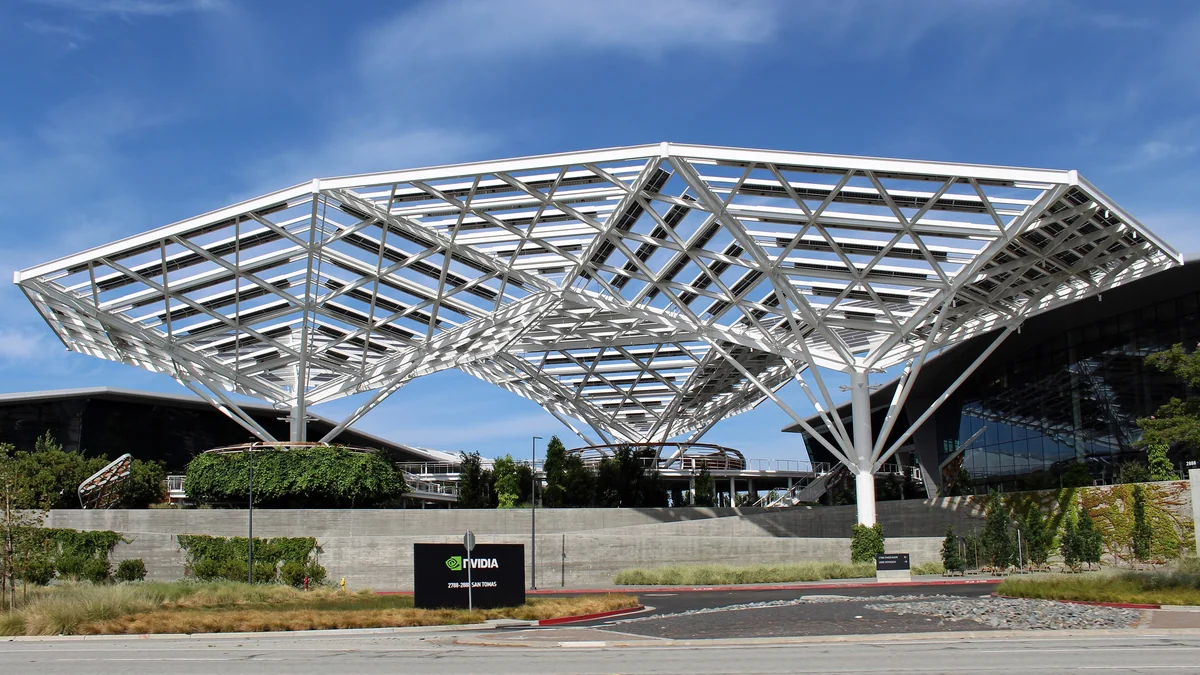
Earlier this year, Jensen Huang walked onto a stage in Santa Clara and declared Marvell "the next trillion-dollar company." The room absorbed the claim the way audiences absorb bold forecasts from Nvidia's CEO — somewhere between prophecy and performance. But the $4 billion that followed those words was not rhetoric.
In 2026, Nvidia placed $2 billion into Marvell and another $2 billion into Lumentum. Two separate bets, written at roughly the same time, targeting two companies that have now agreed to merge into one. If you map the capital flows before the announcement date, a pattern emerges that looks less like coincidence and more like deliberate ecosystem construction.
This is behavioral mapping made visible. Nvidia, the dominant AI chipmaker, positioned itself upstream in both the custom silicon layer and the optical interconnect layer. Now those two layers are collapsing into a single entity valued at $115 billion. The architecture Huang described on stage is being built, quietly, through investment and consolidation rather than internal R&D alone.
The strategic logic is stark: Nvidia designs the GPUs; Marvell designs the networking chips connecting them; Lumentum builds the optical transceivers carrying the data between them. A $4 billion investment across that chain is not passive portfolio diversification. It is verticalization without formal ownership — influence without the antitrust exposure that direct acquisition would trigger.
The question regulators will eventually face is not whether Nvidia controls this merger. The question is whether it needs to.
Governance Architecture and the Regulatory Gauntlet Ahead
The boardroom structure of the combined entity looks tidy on paper. Matt Murphy retains his position as Chairman and CEO, providing continuity at the top of a $115 billion integration exercise. Lumentum's Michael Hurlston and two additional Lumentum directors will join an expanded seven-member Marvell Board — a composition that signals power-sharing while keeping Marvell's majority ownership logic, 67% versus 33%, visibly intact.
Beneath that tidy structure, the regulatory path is anything but. The transaction requires dual stockholder approvals and multi-jurisdictional clearances, with a projected close in the first half of 2028 — a timeline that signals complexity, not confidence. Compare this to Marvell's 2021 Inphi acquisition, which closed in roughly nine months; the additional eighteen-plus months here reflects a regulatory environment that has grown considerably less predictable.
Nvidia's $2 billion investments in both Marvell and Lumentum earlier in 2026 introduce a structural variable that antitrust reviewers in Washington and Brussels will not ignore. If a dominant AI chipmaker holds strategic stakes in the two companies now merging to control optical interconnect supply, the question of AI supply chain verticality becomes a new regulatory frontier — one for which existing frameworks were not designed. No prior semiconductor merger has presented this particular configuration.
Two further unknowns amplify the risk calculus: the undisclosed breakup fee, and whether hyperscaler contracts with Marvell contain change-of-control clauses that could unwind commercial relationships before the ink dries. For policymakers watching consolidation reshape critical infrastructure, the governance architecture of this deal is not merely a corporate formality. It is the first test of whether existing regulatory tools are equipped to govern the AI era's emerging supply chain oligopolies.
The Marvell–Lumentum Consolidation and What a $550 Billion Market Means for Policy
A $115 billion acquisition premium is one data point. The $550 billion total addressable market that the combined entity now targets is another. The gap between those two figures is where industrial policy either wakes up or falls permanently behind.
This is, on record, the largest merger between two publicly traded companies — a structural fact that antitrust frameworks were not designed to metabolize at AI timescales. The combined entity would directly challenge Broadcom's dominance in networking silicon, not through incremental product competition, but through full-stack vertical integration: semiconductors, photonics, and optical routing unified under a single corporate architecture. If that architecture sets the standard for AI data center connectivity, regulatory jurisdiction over it becomes a geopolitical question as much as a legal one.
Marvell's deployment of appreciated stock — up 120% year-to-date before the announcement — as acquisition currency reveals a pattern that European policymakers have yet to formally classify. This is valuation-driven M&A in its most concentrated form: high-multiple equity exchanged for physical manufacturing capability. Estonian and European entrepreneurs operating in the AI infrastructure supply chain now face a landscape where three or four continental-scale entities will set procurement terms, interoperability standards, and ultimately price.
The strategic question is not whether to regulate this consolidation. It is whether European industrial policy can move fast enough to ensure that the $550 billion market being built by the Marvell and Lumentum combination today does not arrive in Brussels as a fait accompli tomorrow.