
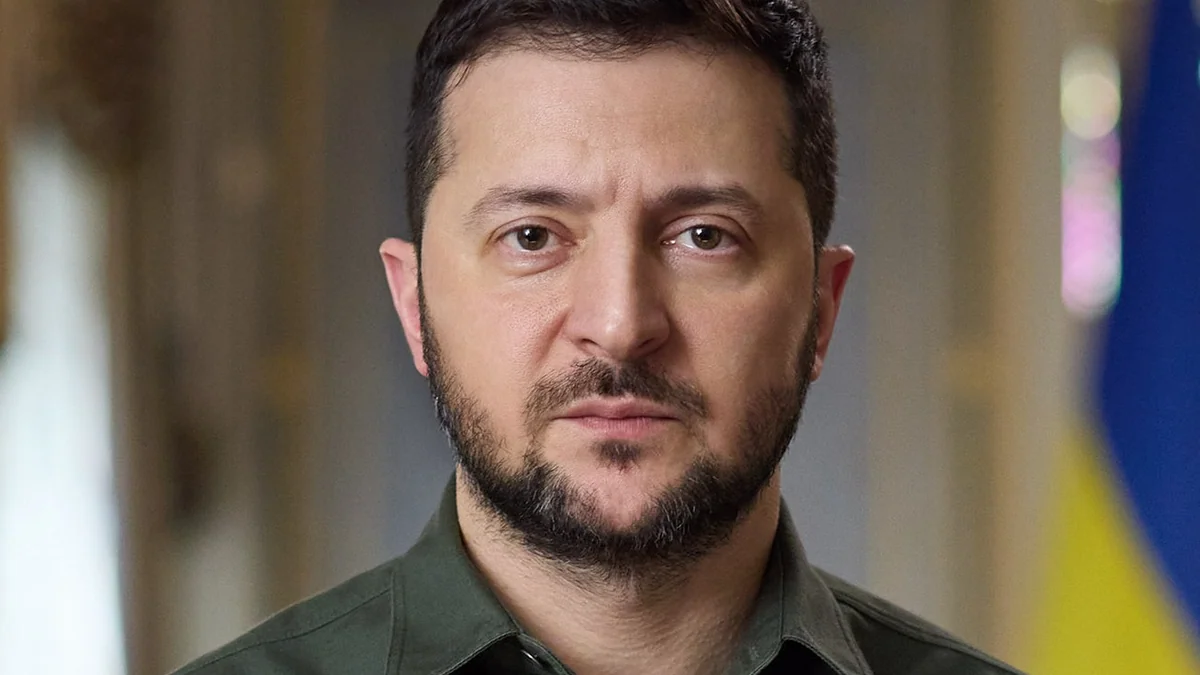
At the October 2026 European Council summit, Volodymyr Zelenskyy presented a stark calculation: a Ukrainian defeat would trigger a migration of up to 20 million refugees into Europe. This strategic pivot replaces moral appeals with a pragmatic cost-benefit analysis, linking military aid directly to the internal security and budgetary stability of EU member states.
In December 1999, the Helsinki summit was thick with the language of expansion and the construction of a 'security architecture' that felt, at the time, like a permanent blueprint. Twenty-seven years later in Brussels, the architecture is being interrogated for its load-bearing capacity. When Volodymyr Zelenskyy sat down with European leaders this October, he did not come as a guest requesting a seminar on EU accession. He came with a ledger. His question was simple: do you want twenty million Ukrainians on your doorstep? This is the new survival strategy for Kyiv—a pivot from the heart to the spreadsheet.
This is not a hypothetical scenario built on air. There are currently four million Ukrainians living under temporary protection across Europe; Eurostat records these lives in cold, measurable rows. Zelenskyy did not build his argument on empty threats, but on a social pressure that every interior ministry in the bloc already feels. In the halls of the Council, the institutional routine of consensus met the kinetic reality of a crumbling power grid. It is an uncomfortable friction. European leaders prefer the slow work of the communiqué; the Russian military prefers the systematic disassembly of transformers before the first frost. It is difficult to bridge these two logics with soft adjectives.
The Arithmetic of Mass Displacement
The figure of twenty million is not a rhetorical flourish; it is a recalculation. Zelenskyy has changed the currency of the conversation—out goes the moral obligation, which for many capitals reached the point of diminishing returns in 2024, and in comes the logistical pressure test. The argument is structurally simple: aid is expensive, but the collapse of the front is a fiscal catastrophe. Fourteen million Ukrainians have already been displaced, either internally or across borders. Zelenskyy's arithmetic suggests this is merely the preamble if Western support ceases and the defensive lines break.
Somewhere, a spreadsheet in a national treasury was quietly updated as he spoke. The moral duty to help is a sentiment that exhausts itself; a structural threat to the social fabric of Berlin or Paris is a different matter entirely. The systematic destruction of energy infrastructure in Volhynia is the concrete evidence supporting this fear. Every substation struck is a push-factor for a new wave of migration. The 'Victory Plan' is the political frame, but the underlying mechanism is the avoidance of a movement of people that no domestic ministry could manage. Stability in Ukraine is simply cheaper than the social integration of millions.
The Washington Variable: Throttling and Dependency
There is a technical reality underneath the grand strategy: the communication links for Ukrainian strike drones are being throttled. The Starshield system has been intentionally choked above a certain threshold—a new form of arms control where the limit is set in a server room rather than a Geneva conference hall. This restriction coincided with a period of renewed pressure from Donald Trump for Kyiv to halt its offensive operations. The structure of the deal speaks for itself: the technological key is held by a private entity in a third country that requires political reciprocity. Dependency has become a technological trap.
Trump has recently moved from rhetoric to the logistics of diesel fuel and calls for a change in the Ukrainian leadership. These facts sit in the same paragraph as the Starshield throttling. A security guarantee for Europe that lacks its own satellite capacity is a guarantee with a hole in the center. While European leaders can deliver air defense batteries, the drone communications that actually hold the line remain dependent on American private networks. Until Europe controls the signal, Kyiv's freedom of maneuver remains a leased commodity. Ukraine is developing its own solutions, but the gap is wide, and the coming winter will show whether European industry can fill it before the next set of restrictions is applied.
Berlin, Tallinn, and the Direction of the Compass
In the conference rooms, the reactions split along the usual fault lines. Friedrich Merz in Berlin is doing the math: he must choose between paying for weapons today or paying for the social welfare of millions of new residents tomorrow. It is a sardonic choice for a Chancellor, but a necessary one. Kaja Kallas, meanwhile, remains focused on the only real lever Brussels has left: the frozen Russian assets. Using the aggressor's money to defend the victim is the most logical financial path, yet it remains mired in the caution of the big powers.
Estonia's Kristen Michal was even sharper, supporting Ukraine's right to strike the Russian oil industry directly. This is the small-nation floor in action: a clear-eyed view of the threat that larger capitals, insulated by geography, cannot yet bring themselves to adopt. Tallinn's position has become the moral compass of the debate precisely because it lacks the luxury of pretending the status quo is eternal. Behind the scenes, however, there is a distinct tremor of anxiety regarding Zelenskyy's public friction with Washington. Some officials fear that public critiques of Trump will invite a retaliation that Europe cannot buffer.
The December Marker
The meeting between Zelenskyy and Hungary's Péter Magyar was perhaps the most significant quiet event of the summit. Magyar is the first Hungarian leader in years to maintain a functional dialogue with Kyiv. Whether this translates into a change in Hungary's habit of blocking Council decisions remains the open question. A new face in Budapest does not automatically mean a new policy, and Magyar will have to prove that his pro-European stance includes practical support for a neighbor under fire.
As NATO Secretary General Mark Rutte discusses the logistics of missile defense, the race against the thermometer begins. Delivery is no longer a promise; it is a race. There are three open variables to watch: the true intent behind the signals from Washington, the concessions demanded of Kyiv, and the ultimate direction of the new leadership in Budapest. None of these are settled.
The concrete marker to watch is the December budget negotiation. This is where the rhetoric about 'standing together' meets the actual allocation of funds. Read the final text of the budget agreement: if it states that member states shall contribute specific sums to the Ukraine facility, a genuine strategic shift has occurred. If the language says they should explore options, the 20 million warning was heard but not believed, and we will be back in this same room by spring. Decisions are being made, even if they are only the decision to wait.