
While the relative calm of August suggested that the Estonian economy had finally found a sustainable equilibrium, the underlying volatility of a globalized supply chain remained unaddressed. In September, this facade of stability dissolved as the Consumer Price Index (CPI) accelerated to 3.5%, a sharp departure from the 1.5% level recorded just one month prior. This leap is not merely a statistical fluctuation; it represents the collision of local consumption patterns with aggressive geopolitical shifts, primarily driven by energy costs and structural housing expenses.
According to data from Statistics Estonia, the monthly growth reached 0.9%, a figure that points toward systemic pressure rather than a localized price shock. When we observe that the prices for goods rose by 3.6% and services by 3.5% simultaneously, it becomes clear that we are not dealing with a sectoral anomaly. If both components move in such close synchronization, then the inflationary current is broad-based, permeating the very socio-economic blueprint of the nation. This uniformity suggests that the costs of doing business are rising across the board, leaving few avenues for consumers to hedge against the surge.
On the international stage, Estonia's Harmonized Index of Consumer Prices rose by 3% according to preliminary estimates. This positioning places Estonia among the higher-ranking members of the Eurozone regarding inflationary pressure, a metric that directly impacts our export competitiveness and long-term budgetary planning. The suddenness of this acceleration in September forces us to ask why the domestic market remains so uniquely sensitive to external shocks compared to its European peers.
Fuel as a Geopolitical Engine
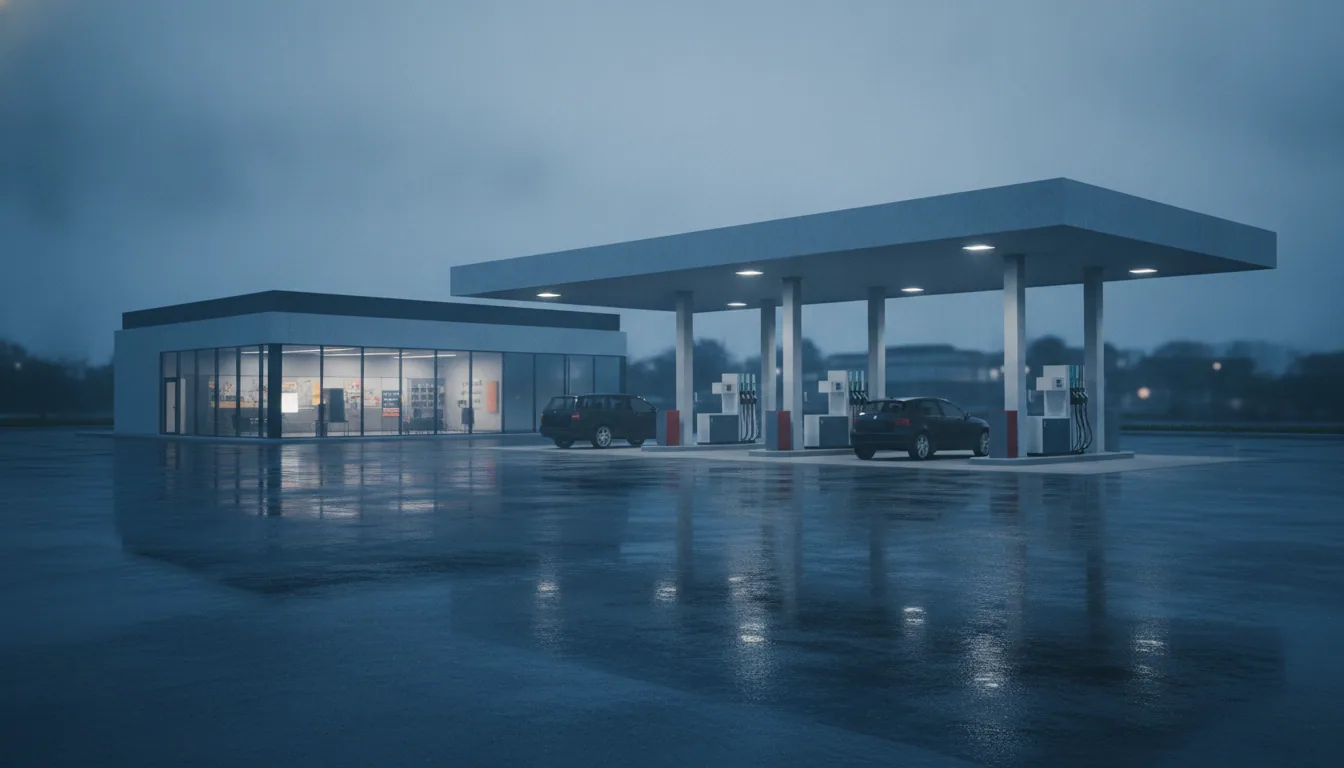
In the current global landscape, energy is the primary transmission mechanism for instability. Diesel prices in September 2025 were 58% higher than the previous year, a stark internal echo of the ongoing military conflicts in the Middle East. Similarly, gasoline prices saw a 33.8% increase over the same period. Lauri Veski of Statistics Estonia explicitly linked these shifts to the geopolitical friction points that dictate global oil markets, proving that the Estonian pump is inextricably tied to distant frontlines.
The logistics and transport sectors are the first to absorb these blows, but the ripple effects are felt throughout the entire value chain. If input costs for diesel rise so abruptly, then the transportation of food, construction materials, and consumer goods must inevitably follow. Analysts are now closely monitoring how much of this fuel volatility has already been baked into the price of other services that have yet to hit their peak. In the Estonian context, where transport distances are short but reliance on road logistics is high, these costs are unavoidable.
The Inelasticity of Housing Costs
While fuel prices are visible at every gas station, a more insidious wave of inflation is nesting within household utility bills. Waste removal costs surged by 56.6% over the year, while piped gas increased by 44.5%. These are not discretionary expenses; they are structural requirements of modern life where the consumer has almost no choice in service providers. This lack of market elasticity means that households must simply absorb the cost, reducing their discretionary income for other sectors of the economy.
The anatomy of these housing costs reveals a complex web of correlations: the price of waste removal reflects the intersection of fuel, labor, and equipment costs, while gas prices remain at the mercy of global market dictates. With wood fuels rising by 10.6% and electricity by 6.1%, the maneuvering space for the average family is narrowing. Low-income households bear this burden disproportionately, as a larger share of their budget is anchored to these essential, non-negotiable services. When the cost of basic infrastructure outpaces the cost of lifestyle goods, we are witnessing a fundamental shift in institutional behavior regarding pricing.
Deflationary Pockets and Policy Interventions
There are, however, specific areas where the old order of rising prices has been momentarily reversed. Food and non-alcoholic beverages became 1.2% cheaper compared to last year. After years of food being the primary driver of inflation, this cooling provides a modest, albeit necessary, relief for the consumer. Furthermore, political decisions have directly influenced the data: Tallinn's move to abolish kindergarten fees for most families resulted in a 30% drop in the cost of childcare services in the capital.
These deflationary pockets—including a 13.8% drop in airfare following the end of the summer season and a 1.5% annual decrease in clothing and footwear—act as a temporary counterweight. Yet, they should be viewed as anomalies or seasonal shifts rather than a permanent trend. If the underlying energy and housing costs remain high, these minor reliefs will likely be consumed by the next wave of structural price adjustments.
From Temporary Shock to Structural Paradigm
The contraction of retail trade volumes by one percent as early as May was a leading indicator of consumer caution. History suggests that a cooling of consumption often precedes a broader economic slowdown. Raul Eamets, Chief Economist at Bigbank, has already warned that the high price of natural gas could eventually leak back into food prices via the cost of fertilizers, creating a feedback loop that could sustain inflation into the next year.
The duration of the Middle East conflict remains the most volatile variable in Estonia's economic forecast. The September data has made it clear that what was once considered a temporary shock can rapidly transform into a structural break if the state's fiscal and social responses are not sufficiently agile. We must now ask: is the Estonian economy prepared for a paradigm shift where high energy costs are no longer the exception, but the rule?