Šefčovič in Beijing: The Summit Behind the Summit
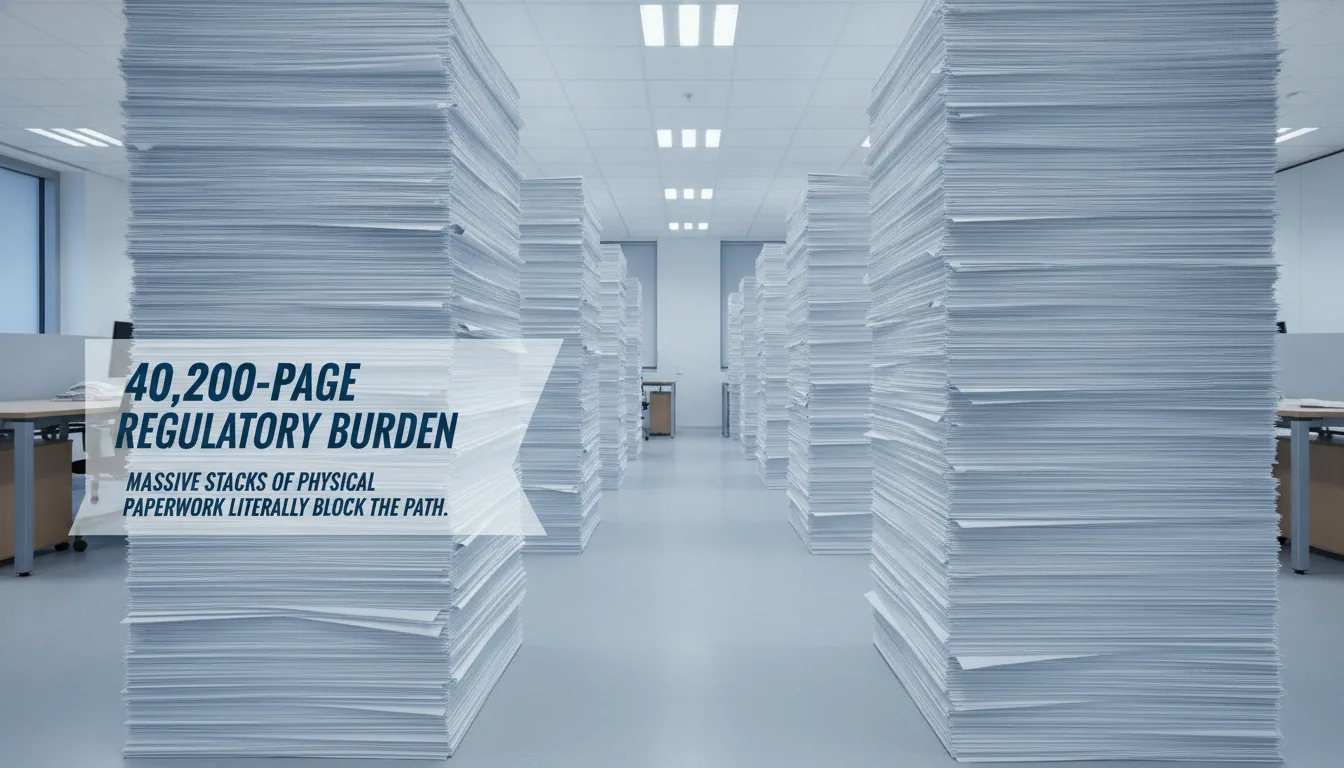
One billion euros a day. That is not a headline figure designed to provoke - it is the arithmetic of the EU-China trade deficit, running at approximately that rate through 2025, which closed at 359.9 billion euros. A ledger line that size does not sit quietly in Brussels annexes; it accumulates political pressure the way a glacier accumulates ice, slowly and then all at once.
Into Beijing in October 2026 walked Maroš Šefčovič, the EU Trade Commissioner, to meet Chinese Commerce Minister Wang Wentao. The mission is specific: reach enough of an agreement before the European Council convenes on October 15-16 that officials can present what they are calling measurable results. The phrase is careful, almost evasive - the kind of language built to mask how much remains unresolved.
The EU's formal position on China has not changed. The official triple definition - partner, economic competitor, systemic rival - still stands, and all three categories are meant simultaneously. That formulation, introduced as diplomatic precision, functions in practice as a permanent internal contradiction: you cannot pursue de-risking from a systemic rival while also asking that rival to close a 359.9 billion euro gap. The definition is the load-bearing wall. The summit photograph is the moulding.
What Šefčovič carries into those rooms is not merely a trade brief but the accumulated weight of a relationship that accounts for nearly 30 percent of total global goods and services trade. The October 15-16 deadline is real. What measurable means, precisely, is not yet public - and that gap between the word and its content is where this negotiation will be decided.
The Tariff Pivot: From Battery Cars to Hybrids
In October 2024, the European Commission imposed five-year countervailing duties on Chinese battery electric vehicles. The rates were graduated by manufacturer: SAIC at 35.3 percent, Geely at 18.8 percent, BYD at 17 percent. Combined with the standard 10 percent import duty, the ceiling reached 45.3 percent - enough, in theory, to price Chinese BEVs out of the volume market.
The theory held for about a quarter. Chinese hybrid exports to the EU stood at 3,800 units in October 2024. By July 2026 that figure had reached 50,000. The 2024 duties did not slow Chinese automotive penetration; they redirected it. The tariff schedule named a category, and the category was abandoned.
This is the load-bearing wall the Commission failed to identify. The BEV tariff targeted a powertrain classification, not a production system, a supply chain, or a price advantage. Chinese manufacturers hold all three regardless of which drivetrain sits under the bonnet, and a pivot to hybrids costs them less than the duty cost them in Brussels.
The Commission is now evaluating safeguard measures or quotas specifically targeting hybrid imports - though whether these will take the form of percentage tariffs or hard volume caps remains, as of this writing, undecided. Beijing's response has been consistent: EU measures violate WTO rules and constitute protectionism. In July 2025 the EU Foreign Affairs Council gave that argument partial credence, labelling certain 30 percent tariffs unjustified and unacceptable - a concession that complicated the Commission's escalatory logic before the Beijing talks had even begun.
The dispute has, in other words, already produced one round of internal EU disagreement about where the line falls between legitimate trade defence and a tariff written to protect a domestic industry that cannot yet compete on cost.
The Green Triangle: Solar, Magnets and the Dependency That Tariffs Cannot Touch
The arithmetic is straightforward and the Commission knows it. China supplies 98 percent of the EU's solar panels, processes 100 percent of rare earth compounds used in permanent magnets, and controls 86 percent of global polysilicon production. These are not contested estimates from a trade lobby. They are the load-bearing numbers inside every European green transition plan currently in circulation.
The structural paradox follows directly. Brussels imposes tariffs on finished Chinese electric vehicles to protect European manufacturers, while those same manufacturers depend entirely on Chinese-processed inputs to build the alternative. A permanent magnet motor in a European-assembled car runs on rare earths refined in China. The tariff touches the product at the border; it does not touch the supply chain behind it. That is the load-bearing wall. Everything else is moulding - pull it and nothing falls.
Von der Leyen's de-risking framework names this problem without resolving it. The policy ambition is to diversify critical supply chains over time, to reduce strategic dependence without the economic rupture of full decoupling. The ambition is reasonable. The arithmetic is not yet cooperative.
The scale of the wider Sino-European commercial relationship sets the ceiling on how hard either side can push. EU-China trade in goods and services represents nearly 30 percent of total global trade. That figure is not a reason for complacency; it is a constraint on the available instruments. Decoupling is a word that circulates freely in policy papers and tends to meet the supply chain on the way out of the building.
The practical question for any reader following these negotiations is simpler: watch whether the October summit produces a specific diversification timeline with binding milestones, or a general commitment to dialogue. The first is a policy. The second is a photograph.
The tariff touches the product at the border; it does not touch the supply chain behind it.
The American Variable: Trump, Tariffs and the EU's Middle Path
Donald Trump's return to trade hostility with China has rearranged the furniture in every room where EU-China talks happen. "So much for being Mr. Nice Guy," he said, announcing a new round of tariffs on Chinese goods - and the line carried more diplomatic consequence than most formal communiqués. When Washington raises its walls, Chinese exports do not disappear. They redirect. The question for Brussels is simple: redirect to where.
The arithmetic of deflection is not hypothetical. Chinese hybrid car imports to the EU ran at 3,800 units in October 2024, the same month the Commission imposed its battery-electric tariffs. By July 2026, that monthly figure stood at 50,000. The American tariff wall and the European BEV wall rose in rough parallel, and the goods found the gap between them. A factory in Zhejiang does not pause production because one market closes; it recalculates the shipping manifest.
The EU's official position is that it is not Washington. The Commission's language of "de-risking" is chosen precisely to mark the distance from the American decoupling doctrine - reduce dependency on critical inputs, yes; sever the trading relationship, no. That distinction matters to Beijing as a negotiating signal, and it matters in Brussels as political cover for member states whose industries still require Chinese rare earths and solar panels. Whether it holds as American pressure mounts is the question Šefčovič carried to Beijing. A middle path requires both sides to stay on it.
The Small State in the Margin: Estonia, Peat and Asymmetric Exposure in EU-China Trade
In September 2002, Jiang Zemin became the first Chinese head of state to visit Tallinn. He welcomed Estonia's accession to both the European Union and NATO, and spoke of ports and trade routes and a new chapter. It was, on its face, a generous gesture toward a small country that had just emerged from fifty years of Soviet occupation. What arrived in the two decades that followed was a trade relationship so narrow it barely qualifies as one: by 2025, Estonian exports to China had slipped from 242 million euros to 225 million euros, and nearly a quarter of that total consisted of peat.
Peat. The compression of ancient bog matter, dug from a country that is roughly 22 percent wetland, shipped to Chinese horticulture markets. That a Baltic state's single most significant export category to the world's second-largest economy is decomposed vegetation tells you something about the architecture of EU-China commerce that the aggregate deficit figures do not. Small members were never really at the table when Brussels framed the de-risking strategy; they inherited its exposure.
The contrast with the larger EU exporters is not subtle. Germany negotiates from the weight of its automotive sector; France from aerospace and luxury goods. Estonia negotiates from peat and a 225-million-euro line that Beijing could erase with a procurement directive and a phone call. The pattern is not unique to Estonia - it is the standard geometry of collective trade decisions, where the shared policy is calibrated to the median member and the tail absorbs what the median never priced.
What the October Summit Will Actually Decide — and What to Watch
Šefčovič arrived in Beijing carrying a single requirement: measurable results on the deficit before the October 15-16 summit in Brussels. The deficit ran to 359.9 billion euros in 2025, roughly one billion euros per day. The Commission needs a number that moves, or a mechanism that credibly could move it.
The concrete watch-marker is the hybrid safeguard decision. Chinese hybrid imports rose from 3,800 units in October 2024 to 50,000 in July 2026 - a 1,215 percent increase in twenty-one months, following directly from the BEV tariffs. Whether the Commission imposes a percentage duty or a hard volume quota matters less than whether it imposes anything at all. No action signals that the tariff architecture can always be walked around, one category at a time.
Read one line of whatever joint communiqué emerges from these EU-China trade relations talks: if it says the parties shall adopt safeguard measures, someone lost something. If it says should, this will be back on your screen before spring. A deal built on decoration holds only until the next pivot. The structure does not change in October, only the surface does.