The Chokepoint That Rewired Global Energy Markets
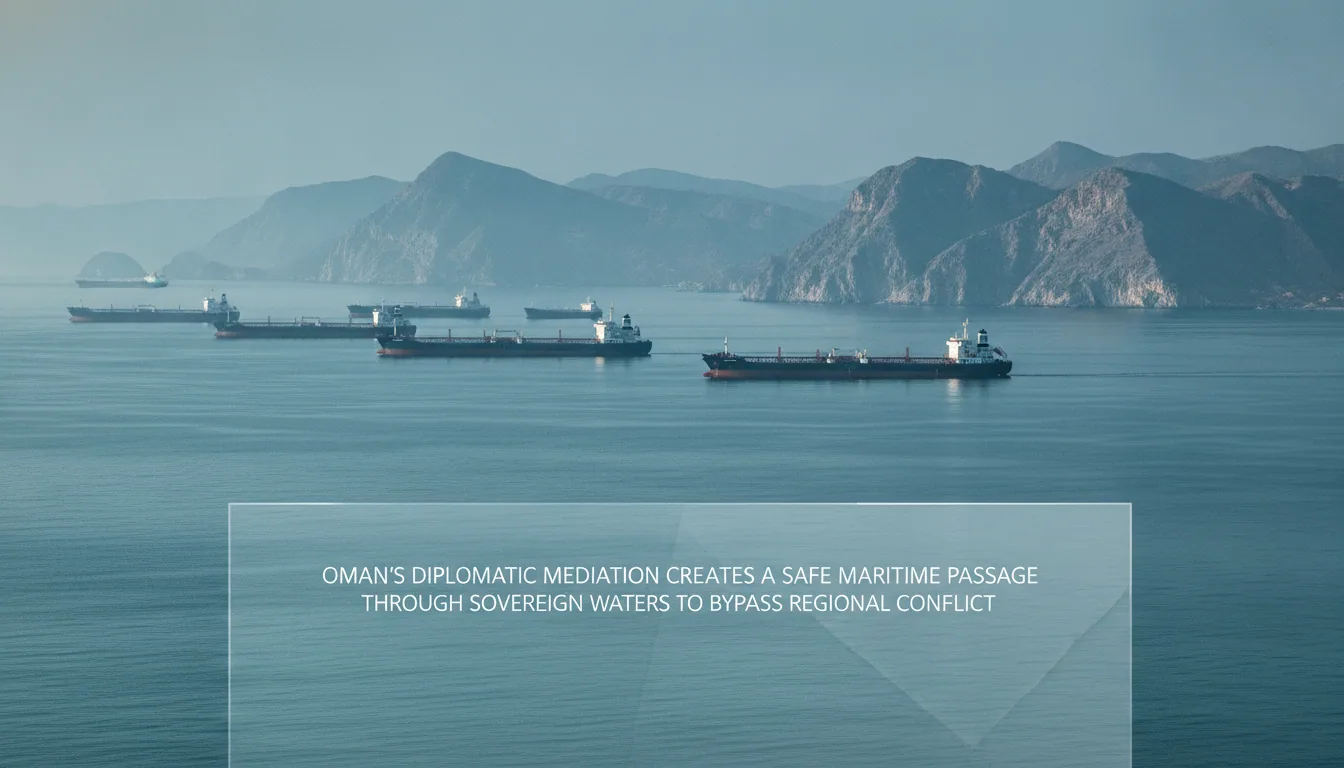
A waterway barely 54 kilometres wide at its narrowest point should not be capable of holding the industrialised world hostage - or forcing a G7 strategic reserve release of historic scale. Yet by autumn 2026, that is precisely what the Hormuz Strait had done. Oil flow through the corridor collapsed to less than 10 percent of normal levels as regional conflict escalated, severing the primary artery through which roughly a fifth of the world's traded petroleum has historically moved.
The numbers alone rewrite every assumption about supply-chain resilience that G7 policymakers carried into the decade.
What made this crisis structurally different from prior shocks was the compounding effect. Concurrent attacks on Russian refinery infrastructure narrowed global diesel margins at precisely the moment when the loss of Hormuz transit had already stripped spare capacity from the system. Crude is one problem; diesel is another, more immediate one.
When refining throughput contracts and seaborne crude simultaneously disappears, the cracking spread collapses into a warning signal that logistics networks cannot long absorb.
The consequences landed visibly on consumers. UK diesel surpassed two pounds per litre; US prices crossed 6.5 dollars per gallon. These are not abstract commodity fluctuations but direct transmission mechanisms into food costs, freight rates, and manufacturing inputs - the full socio-economic chain from terminal to supermarket shelf.
A single maritime chokepoint, amplified by refinery attrition, had achieved what no coordinated policy would have dared engineer: a simultaneous supply shock across every node of the global transportation economy. The institutional response, when it came, would be historic in scale.
October 2, 2026: The Anatomy of a G7 Strategic Reserve Release
Rare transatlantic consensus is not built on diplomacy alone. It is built on shared pain. When US President Donald Trump and French President Emmanuel Macron simultaneously confirmed the coordinated strategic release on October 2, 2026, the signal was as significant as the action itself: two leaders whose governments have clashed repeatedly on trade and energy sovereignty chose alignment over competition.
The agreed volume was 100 million barrels of combined crude oil and refined diesel fuel, released through the framework of the International Energy Agency. IEA Executive Director Fatih Birol is overseeing both implementation and monitoring, lending institutional legitimacy to what would otherwise risk appearing as an ad hoc political response to a price crisis. The coordination mechanism matters: the IEA's multilateral architecture depoliticises the release, transforming a politically motivated decision into a rules-bound market intervention.
The composition of the release is structurally telling. Including diesel alongside crude signals a deliberate departure from previous reserve actions, which were predominantly crude-focused. Diesel is the fuel of the real economy, powering trucking, logistics, and industrial heating.
Targeting it specifically indicates that G7 analysts understood this crisis as a transport sector emergency, not merely a headline oil price problem.
Equally significant was the accompanying commitment from all G7 member states to avoid internal energy export restrictions. This pledge addressed a structural risk directly: without it, individual governments facing domestic price pressures would face incentives to hoard supply, fragmenting the coordinated effort before it could function. The pledge transforms the release from a shared stock-draw into a coherent policy architecture.
The decision did not emerge in isolation. G7 finance ministers had begun formal discussions on emergency release scenarios as early as March 2026. October 2 was not a sudden reaction - it was the institutional endpoint of a process already months in motion.
Diesel First: The Strategic Logic of Front-Loading
When a supply shock hits the transportation sector, crude oil is not the immediate problem. Refined diesel is. The G7's decision to front-load diesel into global markets within the first 20 days of the four-month release schedule reflects a precise diagnosis: logistics networks run on diesel, and their breakdown transmits inflation across every supply chain that feeds modern economies.
The sequencing matters as much as the volume. By concentrating refined fuel releases at the front of the schedule, the IEA and G7 partners are targeting the sharpest point of the crisis first - the immediate shortage gripping trucking, rail freight, and maritime logistics. The remaining months of the release then function as sustained pressure on futures markets, signaling supply continuity beyond the initial shock and discouraging speculative price spikes.
The primary stated goal is explicit: alleviate a critical shortage in the global transportation sector. This is not a generic price-stabilisation measure. It is a sector-targeted intervention, calibrated to the point in the supply chain where fuel scarcity causes the fastest cascade of economic damage.
If diesel flows, goods move. If goods move, retail price pressures ease. The logic is sequential and sound.
The 20-day mark carries institutional weight beyond the fuel volumes themselves. The IEA will release its first formal impact assessment at that point, creating an early accountability checkpoint for the entire operation. Fatih Birol's team will be measuring not just price movements but whether the front-loaded volumes have reached the intended markets.
This built-in review mechanism is a structural safeguard - and a signal to markets that the G7 is prepared to adjust if the initial data demands it.
Price Signals: From £2 per Litre to $88 per Barrel
Picture a lorry driver in Bristol pulling into a motorway service station in late September 2026. The pump display reads £2.04 per litre for diesel. She fills the tank anyway, because the cargo waits for no market correction.
Across the Atlantic, her counterpart in Ohio is watching a $6.50-per-gallon figure blink at him from a fluorescent screen, recalculating whether the haul still turns a profit.
These were not aberrations. They were the price floor of a transport sector running on stress. When the G7 confirmation landed on October 2, crude oil futures responded within hours, dropping to $88 per barrel.
The move was sharp, measurable, and institutional in character - exactly the kind of behavioural signal that markets had been waiting for.
The immediate price correction confirms one thing clearly: the announcement itself carried weight. But an announcement is not a refinery, and $88 per barrel is not $65. The structural question - whether this emergency oil reserve drawdown, spread across four months, can suppress broader energy inflation over a sustained horizon - remains structurally unproven.
The March 2026 release of 400 million barrels offered a cautionary precedent: prices stabilised briefly, then climbed again.
What markets are pricing now is the front-loaded diesel tranche, not the full duration of the programme. The IEA has committed to its first impact assessment at the 20-day mark, and that data point will matter more than today's futures print. For policymakers tracking energy's drag on headline inflation, the real test begins after the initial inventory flush.
Whether $88 holds, or simply marks the ceiling before the next disruption, is the number worth watching.
A 100-million-barrel release calms a trading screen. It does not rebuild a chokepoint.
The Second Emergency in Eight Months: When Policy Becomes Pattern
History rarely announces a structural shift clearly. The October 2 release of 100 million barrels does not stand alone as a crisis response. It is the second major intervention in eight months, following the record 400-million-barrel drawdown in March 2026 - a release that, by all market evidence, failed to produce lasting price relief.
The sequence matters. G7 finance ministers began formal deliberations on this second release as early as March 2026, tracking Middle East war escalations in real time. That timeline reveals something significant: the October decision was not improvised under pressure.
It was incubated over seven months, while the first intervention was still active in the market.
Compare this to the 2011 IEA release of 60 million barrels following Libyan supply disruptions. That was a one-off surgical response to a discrete event. Two releases within a calendar year, the second four times smaller but arriving before reserves from the first have been refilled, mark a different behavioural pattern entirely.
The structural question is unavoidable. If strategic stockpiles are deployed twice within eight months - once at record scale, once as follow-up - they begin to function less as emergency security buffers and more as a standing price-management instrument.
The two roles are not interchangeable. One is a last resort; the other is a policy tool with an expiration date.
For European and Estonian policymakers alike, this distinction carries weight. Stockpiles are finite. The institutional behaviour of treating reserves as a soft lever against energy inflation may work once, perhaps twice.
The third deployment becomes a different calculation altogether.
After the Announcement: The Strategic Question Europe Cannot Defer
A 100-million-barrel release calms a trading screen. It does not rebuild a chokepoint. With Hormuz transit still operating at roughly 10 percent of normal capacity, the October 2 decision buys time, not security, and the price of that time is visible in depleted reserves: this is the second major coordinated release within eight months, following 400 million barrels in March 2026.
The pattern is the problem. Two emergency interventions in a single calendar year reveal a policy architecture designed for singular disruptions, not sustained geopolitical fracture. For Estonia and comparable small open economies in the EU, the exposure is structural: no bilateral energy agreement substitutes for the coordinated G7 mechanism.
And no G7 mechanism has yet answered the questions that matter most - how quickly can reserves be refilled, which member states contributed what share of the 100 million barrels, and what is the contingency threshold if the Strait remains effectively closed through winter? The IEA's first impact report, due 20 days after release commencement, will offer a partial verdict.
Crude at $88 per barrel signals market confidence in the G7 strategic reserve release; it does not signal sovereign resilience. If the institutional architecture governing strategic reserves was stress-tested once in March and again in October, the relevant question for European and Estonian policymakers is not whether the third emergency is coming. It is whether the doctrine governing reserves will survive it.