
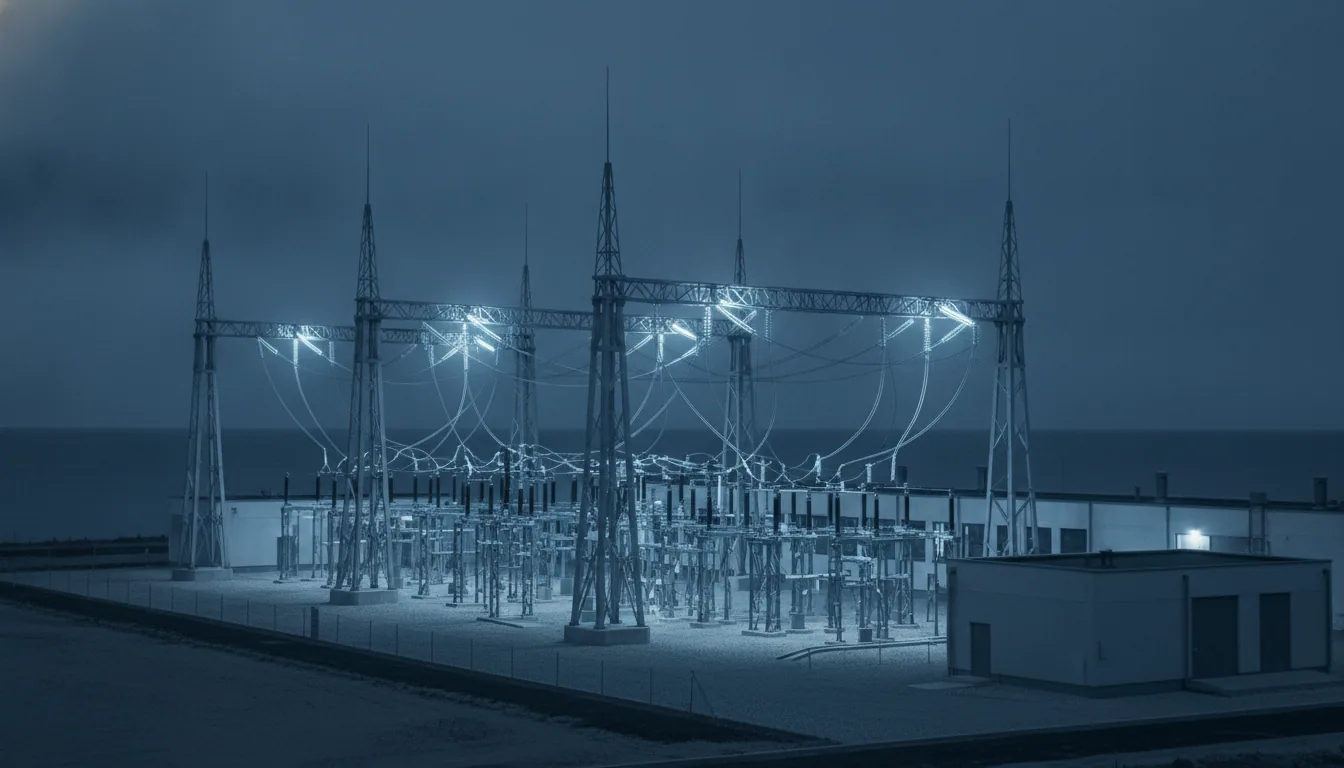
Estonia positions itself as a digital vanguard where algorithmic efficiency should, in theory, optimize our most basic needs, yet the events of September 2026 have exposed a jarring friction between our high-tech aspirations and our physical energy constraints. On September 21, 2026, the Nord Pool spot market delivered a systemic shock when prices underwent a staggering 800 percent leap in just 72 hours. This was not a random anomaly but a predictable consequence of the emerging paradigm in energy trading, where the agility of a 15-minute market meets the rigid reality of a supply chain still struggling with structural imbalances.
To understand the magnitude of this shift, one must look at the data: on September 19, the daily average for Estonian exchange electricity sat at a negligible 0.79 cents per kilowatt-hour, only to skyrocket to 6.75 cents (excluding VAT) by the following Monday. This volatility is the direct result of a socio-economic blueprint that prioritizes intermittent renewable generation without yet securing the controllable reserve capacity necessary to balance the grid during peak demand.
The Weekend Paradox and Institutional Behavior
The price action observed in late September suggests that the current market model is less about traditional supply and demand and more about the extreme behavior of institutional actors under pressure. If a low-consumption weekend coincides with a peak in renewable output, prices naturally gravitate toward zero, creating a deceptive sense of security for the consumer. However, as the workweek begins and industrial demand returns, the lack of dispatchable reserves creates a vacuum that is filled by high-cost marginal units.
On September 21, the daily average reached 67.48 EUR/MWh, a figure that masks the true pain felt during peak hours. For the consumer who opted for a flexible exchange-price package, the logic of the "average" becomes a mathematical trap; the cheap weekend hours do not mitigate the cost of a high-priced Monday morning—they merely accentuate the contrast. We are witnessing a transition where the consumer no longer simply buys energy, but effectively takes a monthly lottery ticket on the health of regional infrastructure and the whims of the weather.
The 15-Minute Market: Precision as a Driver of Volatility
Since October 1, 2025, Estonia has operated on a 15-minute trading interval—a move designed to increase market precision and allow for better cost optimization. While the promise of this system was increased efficiency, the reality on September 21 demonstrated how shorter intervals actually amplify the physical reality of the grid. At 02:15, the price was a modest 0.77 cents per kilowatt-hour, but by 20:30, it had ballooned to 25.1 cents.
If the trading interval is shortened, then every transmission constraint, every drop in wind speed, and every evening demand spike is reflected with brutal immediacy in the price. The balancing energy market, or mFRR, has already shown us the ceiling of this new world; in August 2025, prices momentarily hit 9,999 EUR/MWh. This indicates a profound scarcity of the flexible, steerable reserves required to stabilize a 15-minute system—a behavioral shift that most households are structurally unable to match through consumption management.
Volatility as the New Structural Norm
Data from the Competition Authority indicates that the standard deviation of electricity prices in Estonia has surged to 92 percent, signaling that volatility is no longer a temporary glitch but a fundamental characteristic of the market. While the 2024 average price of 87.27 EUR/MWh suggested a return to normalcy, the February 2025 average of 151.85 EUR/MWh serves as a reminder that we are operating within a new, unstable reality.
For the entrepreneur, this means that energy costs can no longer be treated as a predictable line item in a business plan. While fixed-price contracts offer a shield, the insurance premium for such stability has risen significantly, essentially forcing the consumer to pay for risk twice. If the amplitude between price peaks and troughs continues to widen, the danger is that flexible consumption will no longer save money; it will merely shift the financial damage to a different hour of the day.
Infrastructure Fragility: EstLink 2 and the Eagle S Incident
The physical vulnerability of our energy architecture was highlighted in December 2024 when the tanker Eagle S damaged the EstLink 2 cable, a failure that fundamentally rewrote the price calendar for the following year. The repair, which concluded only in July 2025 at a cost of approximately 60 million euros, underscores how cross-border correlations dictate local prices. Without the full capacity of Finnish interconnections, Estonia remains isolated during periods of high import demand.
Furthermore, the February 2025 synchronization with the Continental European frequency zone marked a critical shift in our security architecture. This bold geopolitical move removed old buffers before new ones were fully operational, creating a period of reorganization where physical vulnerability remains the blind spot of our energy policy. When EstLink 2 is silent, Estonia is effectively an energy island, and the cost of that isolation is reflected directly in the consumer's bill.
Taxation as a Volatility Multiplier
The Estonian electricity bill is a multi-layered construct of energy costs, grid fees, excise duties, and a 24 percent Value Added Tax (VAT) effective since July 2025. The structural problem here is that the state's tax policy acts as an amplifier for market shocks. Because VAT is proportional to the price, the state's revenue increases precisely when the consumer is most stressed by market volatility.
On September 21, the 6.75 cent exchange average was transformed into 8.4 cents for the end user once taxes were applied. This creates a contradictory situation: the state benefits from the very volatility it seeks to regulate. While this tax structure is rational in a stable environment, it becomes an extractive mechanism in a market with a 92 percent deviation. Tax policy is not a technical inevitability; it is a choice that determines how market risk is distributed between the public and the private sector.
The Strategic Mandate for 2026
As we navigate the autumn of 2026, the data suggests that passive consumption is becoming increasingly untenable. If the price difference between a cheap quarter-hour and a peak period can reach such extremes, then active energy management is no longer a hobby for the tech-savvy, but a requirement for economic survival. However, individual action cannot compensate for institutional gaps.
For the grid operator Elering, the construction of EstLink 3 has moved from a long-term goal to a balance-sheet necessity. Every additional interconnection with our neighbors dilutes the impact of transmission constraints and reduces the likelihood that a single technical failure—or a single tanker—can dictate the financial fate of millions. The modernization of our infrastructure is the only viable path to calming the market. The question that remains for policy makers and the state is simple: Who should bear the cost of this transition, and how will we redefine the social contract in an era of permanent energy volatility?