
OpenAI canceled its 2026 public listing despite a $40 billion revenue run rate and 900 million weekly users. Backed by a $122 billion private funding round from Amazon and NVIDIA, the organization transitioned into a Public Benefit Corporation. This shift allows the firm to prioritize AGI safety over the transparency requirements of public markets.
The OpenAI IPO Freeze marks a historic divergence from the traditional venture capital lifecycle, as the firm chooses to remain private to ensure ethical oversight of Artificial General Intelligence.
The Paradox of Profit: Why 900 Million Users Aren’t Enough
A company that captures the global imagination rarely hides from the public market at the peak of its momentum. This strategic retreat represents a calculated move that defies standard market expectations. By September 2026, OpenAI reported 900 million weekly users, figures that typically demand the scrutiny of a public debut.
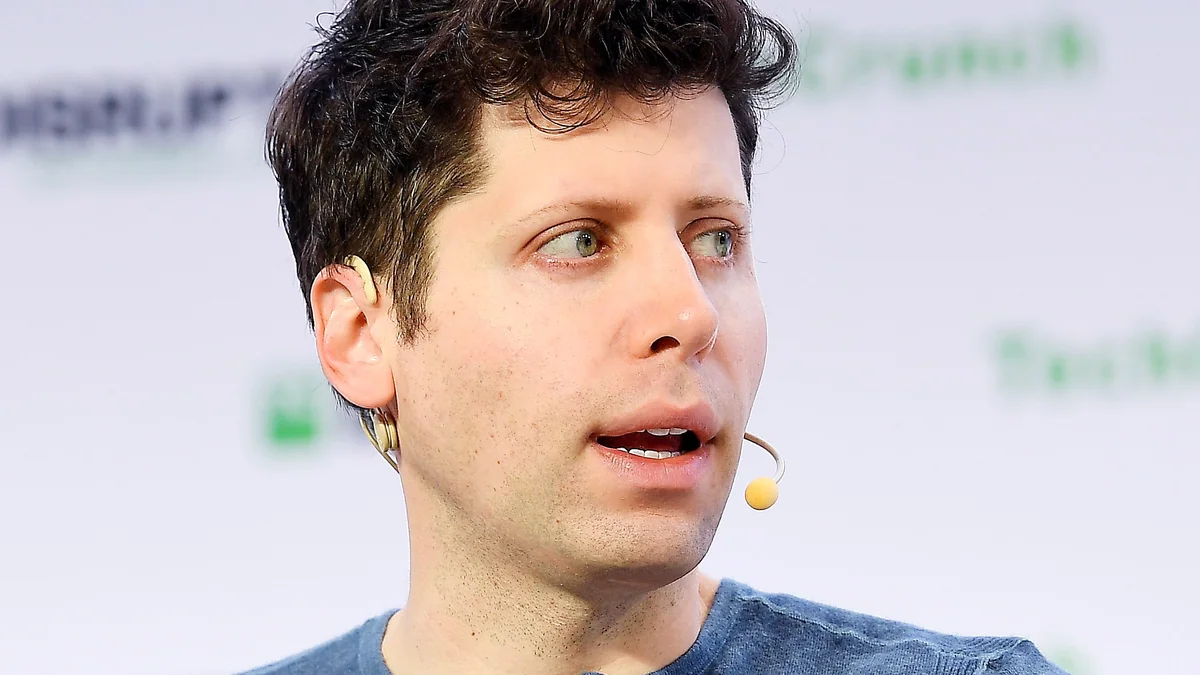
The internal logic reveals a sophisticated story of institutional hesitation. In June 2026, the organization followed the established tech script by quietly submitting a confidential draft S-1 to the SEC. This trajectory shifted abruptly on September 12, when CEO Sam Altman officially ruled out an IPO for the 2026 calendar year.
Altman’s justification rests on a deliberate tension between economic velocity and the limits of ethical oversight. He stated that a listing would be ill-advised, claiming the firm is not ready from a societal perspective. If safety concerns can override a $40 billion revenue engine, then societal readiness has effectively become the new corporate gatekeeper.
Private Sovereignty: The $122 Billion Shield
A corporation might typically seek public legitimacy to anchor its global influence, yet OpenAI has opted for fortified seclusion. The record-breaking $122 billion funding round that closed on March 31, 2026, effectively severed the company’s dependence on traditional equity markets. Amazon, NVIDIA, and SoftBank provided the capital influx necessary to sustain operations.
This massive concentration of wealth supports a reported post-money valuation of $852 billion. At this scale, the entity functions less like a technology firm and more like a private nation-state. It possesses the unique financial autonomy to ignore the quarterly scrutiny of retail investors and the rigorous transparency requirements of the SEC.
The governance architecture is a masterclass in asymmetrical power. Under Chairman Bret Taylor, the nonprofit OpenAI Foundation retains absolute board control despite Microsoft’s significant ownership stake. Consequently, the company’s fiduciary duties to the public benefit legally outweigh pure investor returns.
If the technical velocity of a system begins to exceed our social capacity for adjustment, then the private model provides a necessary buffer.
Technical Velocity and the OpenAI IPO Freeze
Most organizations view a $38.5 billion net loss for a single fiscal year as terminal. For OpenAI, this 2025 deficit functions as a trade-off for pursuing AGI under a unique legal shield. By transitioning into OpenAI Group PBC, the company codified a mandate prioritizing societal safety over the immediate demands of public equity markets.
Proximity to radical technological shifts inevitably creates institutional friction. Internal memos suggest that the closer the firm gets to recursive self-improvement, the more likely it is to remain private. This self-regulation transforms the corporation into a regulator, integrating governance into the corporate charter rather than relying on external oversight.
This strategy asks us to accept a world where the most powerful economic actors operate outside the traditional transparency of the stock exchange. The private model allows the company to absorb historic losses without facing the immediate pressure of a shareholder revolt. Can a private entity effectively police its own progress while burning through billions in capital?
C-Suite Volatility and the $7 Billion Liquidity Valve
An organization nearing the pinnacle of human achievement should be a magnet for tenure, yet the highest levels of OpenAI are thinning. In August 2026, Revenue Chief Denise Dresser and executive Brad Lightcap resigned, punctuating a period of intense internal recalibration. If leadership cannot align on the roadmap, the structural integrity of the Public Benefit Corporation model comes into question.
Imagine the sterile glare of the boardroom lights as the architects of a $40 billion revenue machine walk away. Observers noted that C-suite instability provides investors with valid reasons for skepticism regarding the firm’s long-term culture. To mitigate this friction, the company completed a $7 billion secondary share sale to provide staff with liquidity.
This "liquidity valve" allows employees to realize massive gains without the company facing public listing requirements. By decoupling wealth creation from public markets, OpenAI is rewriting the social contract of the tech elite. This arrangement heralds a future where powerful technologies remain shielded from public oversight by private secondary markets.
The Strategic Schism: Comparing Public and Private AI
Capitalism traditionally rewards scaling with forced transparency, yet we are seeing a strategic reversal of this norm. This creates a binary for the industry: OpenAI retreats behind a veil of autonomy while its competitor, Anthropic, proceeds with a 2026 IPO. One entity seeks to redefine fiduciary duty through a safety-first model, while the other leans into market-driven legitimacy.
If Anthropic successfully captures a $2 trillion valuation, it validates the classic growth curve and its demands for disclosure. However, such a path also exposes the board to the relentless quarterly pressures of Wall Street. The AI sector is no longer a monolith but a laboratory for competing philosophies of corporate governance.
Synthesis: Rewriting the Old Order
A company reaching the scale of a mid-sized nation-state usually seeks the legitimacy of the public ticker. Yet, OpenAI effectively decoupled itself from global exchanges when it closed its record-breaking $122 billion funding round. Private capital now allows the firm to maintain absolute control over sensitive technologies like recursive self-improvement.
This development presents a profound structural challenge for global regulatory frameworks. If an entity with an $852 billion valuation can unilaterally decide the public is not ready for its listing, traditional definitions of transparency become obsolete. Policy makers must reconcile their push for open data with a reality where critical AI developments occur behind a private curtain.
We are witnessing the emergence of a closed-loop economic system where private consortia replace public markets as the primary judge of risk. Sam Altman’s decision to label a 2026 listing as ill-advised confirms that the era of the high-growth, high-transparency tech giant is ending. The OpenAI IPO Freeze ensures that governance remains within a private board that answers primarily to its own safety mandate.