The global pesticide poisoning crisis affects nearly half of the world's agricultural workforce, totaling over 400 million people annually. This public health emergency is driven by outdated safety standards and an increasing dependency on highly hazardous chemicals in regions where protective measures are physically impossible to implement.
Reducing chemical harm requires moving from vague environmental concerns to specific regulatory removals of the most toxic substances. The recent voluntary cancellation of Paraquat in California demonstrates that localized pressure can force practical industry shifts when liability finally outweighs sales.
The California Lever: How Specific Cancellations Prove Change is Possible
In August 2026, the agricultural landscape in California shifted without a single protest banner or a new federal law. Pesticide manufacturers voluntarily canceled the registrations for Paraquat, one of the world's most toxic herbicides. This move demonstrated how localized pressure can force a practical outcome when years of broad scolding have failed.
California is a massive market, and when the legal and reputational costs there became too high, the manufacturers stepped back. Voluntary industry action often follows localized pressure because corporations prefer a managed retreat to a chaotic, nationwide ban.
The urgency of finding these levers was underscored by a massive September 2026 data update in Frontiers in Public Health. The research found that 46% of the world's 934 million farmers and farmworkers are poisoned by pesticides annually. These figures survived intense scrutiny from the agrochemical lobby, which had challenged earlier versions of the research.
By focusing on the most hazardous chemicals first, we can move from vague environmental concern to measurable public health gains. The numbers are large, but the solutions are starting to scale.
Confronting the Global Pesticide Poisoning Crisis: Why Estimates Were Off by a Factor of 400
In September 2026, a landmark study published in Frontiers in Public Health fundamentally recalibrated the scale of the global conversation. The research reveals that between 402 million and 433 million farmers and farmworkers suffer from unintentional acute pesticide poisoning (UAPP) every year. This means that roughly 46% of the global agricultural workforce is poisoned annually.
The discrepancy between these numbers and previous estimates is primarily a matter of data methodology. Direct field surveys reveal that previous hospital records undercounted poisonings by a factor of 400 due to lack of medical access in the Global South. This gap is not a glitch but a systemic blind spot, as many rural workers lack the transport or funds to reach a clinic.
The physical reality of these 400 million cases is found in the immediate symptoms of nausea, vomiting, and debilitating skin rashes. While the majority of these events are non-fatal, the study estimates that 11,000 people die every year from these unintentional exposures. These are predictable consequences of standard operating conditions in high-use regions.
Mapping the hotspots reveals that the human burden is concentrated in Southern Asia, Southeast Asia, and East Africa. India carries a particularly heavy burden in terms of mortality, accounting for nearly 60% of global pesticide-related fatalities. This translates to approximately 6,600 deaths every year, highlighting a crisis that has been largely hidden from international statistics.
The PPE Fallacy: Why Safety Labels Fail in a Warming Climate
Chemical manufacturers often argue that poisoning is a user error rather than a product flaw. They point to safety labels and personal protective equipment (PPE) as the definitive solution. This narrative ignores the basic chemistry of the human body in extreme heat.
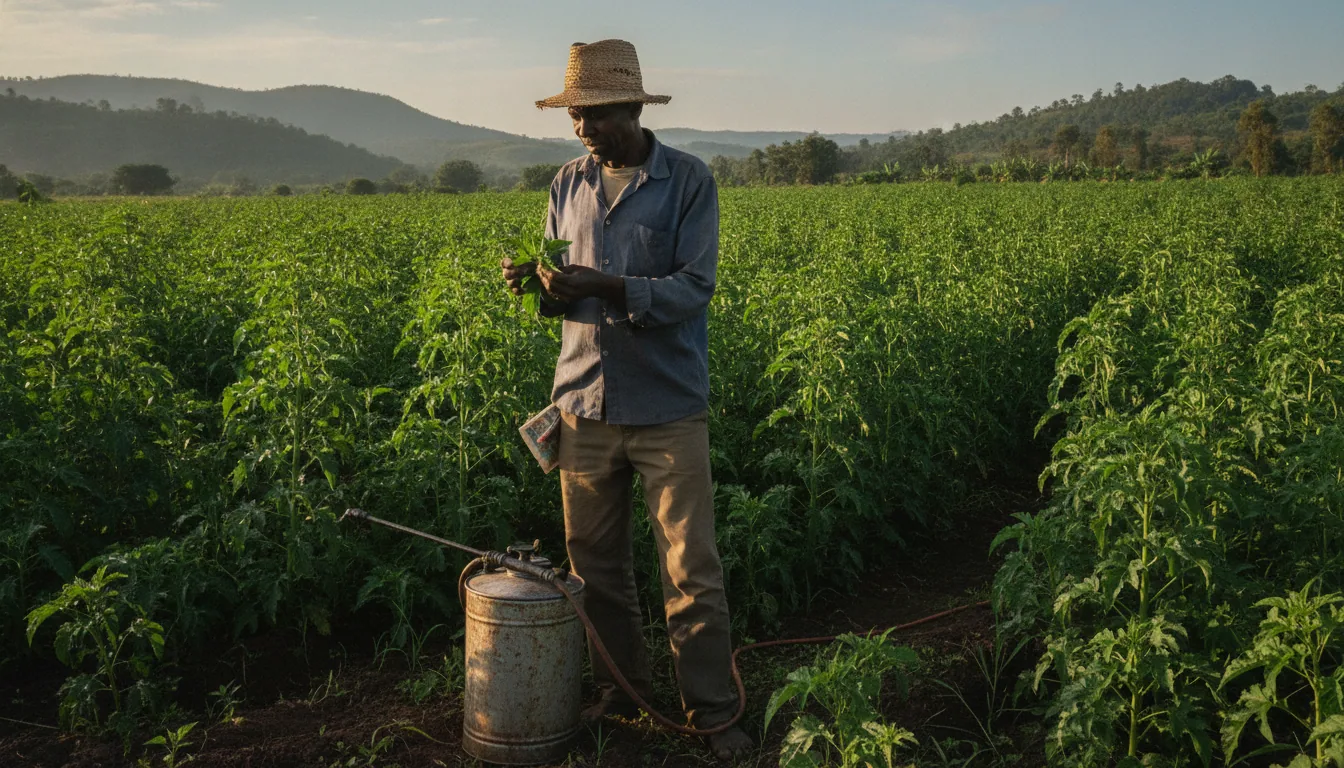
Most safety instructions are designed for temperate climates where a worker can wear a plastic suit without collapsing. Standard safety gear is physically and economically impossible for many workers in the Global South, where a full chemical suit often costs more than a monthly wage.
Claiming a "green" transition in Europe means little if factories simply change the destination address on a shipping label.
Burkina Faso serves as a stark case study, where the national incidence rate for poisoning is 84% every year. Even if a worker could afford the gear, wearing non-breathable layers in 40-degree Celsius heat creates a new set of medical risks. The industry labels this "safe use," but the data suggest that asking workers to choose between toxicity and heat exhaustion is a failure of the tool itself.
The Pesticide Treadmill: Doubling Global Use While Exporting Risk
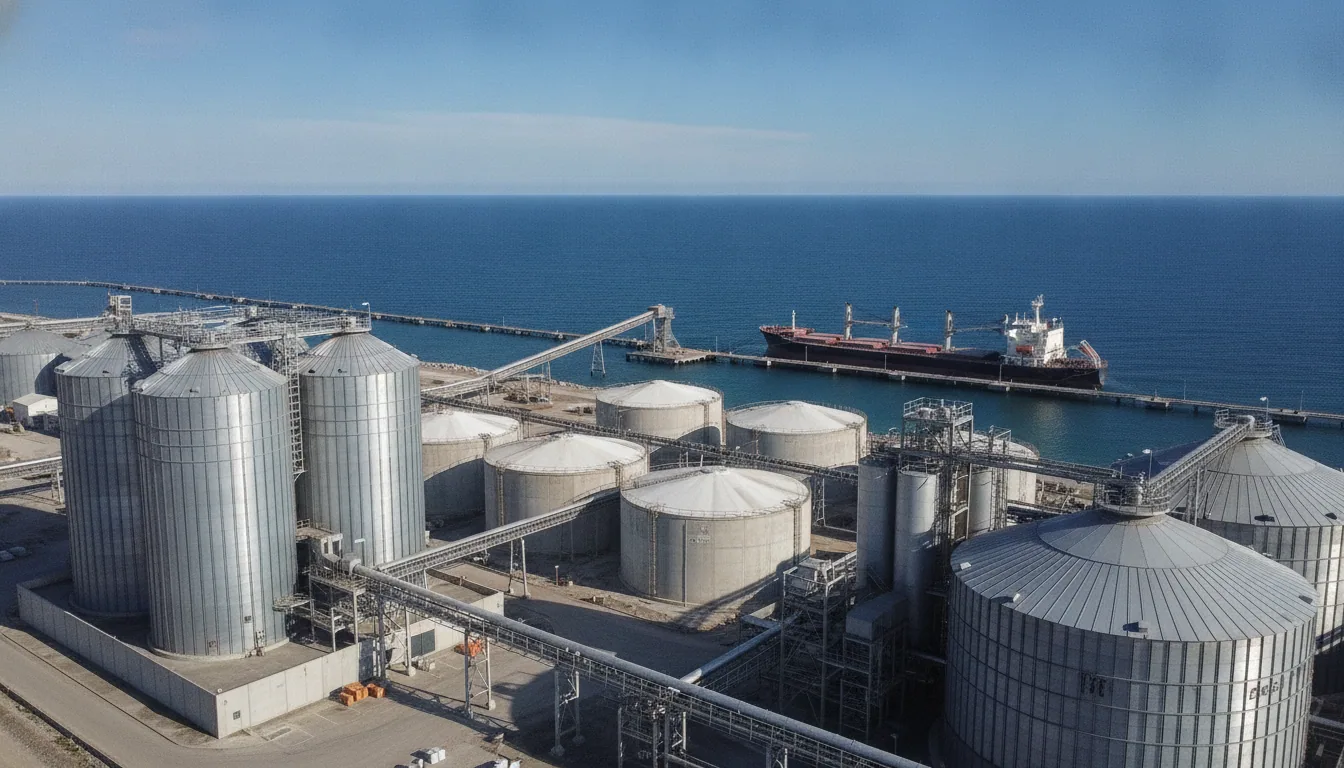
In a bustling port in northern Europe, workers load heavy steel drums onto a vessel bound for Southeast Asia. These drums contain chemicals that no farmer in the European Union is legally allowed to spray on a crop. UN Special Rapporteur Marcos Orellana calls this a "double standard" where risk is exported for profit.
Global pesticide use doubled between 1990 and 2023, reaching 3.8 million tonnes, fueling a treadmill where pests evolve resistance and farmers apply higher volumes of toxic substances. It is a cycle where the chemical volume increases while the efficacy for the farmer often plateaus.
This chemical surge creates a hidden census of suffering, particularly for the 84 million children working in global agriculture. These young workers are biologically more vulnerable to toxic exposure than adults. Yet, they almost never appear in official registries used to set global policy.
The Conflict of Evidence: Industry Pushback and the 2024 Retraction
In science, a retraction usually signals a data failure, whereas in the pesticide industry, it often signals a lobbying success. For decades, groups like Bayer and CropLife International have challenged independent research by claiming field surveys overcount cases. This dismissal ignores why government records undercount actual poisoning events by such a massive margin.
This friction reached a peak in 2024 when a previous iteration of this research was retracted following intense industry pressure. The 2026 update in Frontiers in Public Health confirmed that acute poisoning is a predictable, structural feature of the chemical-heavy model rather than a statistical fluke. Transparent data collection is the first tool for reform.
The 2035 Scorecard: Phasing Out Highly Hazardous Pesticides
The Global Framework on Chemicals has finally provided a hard metric for progress. Target A7 mandates a complete phase-out of highly hazardous pesticides (HHPs) by 2035, transforming a vague goal into a clear engineering deadline.
Moving toward agroecology does not have to mean a collapse in food production. Data from the Food and Agriculture Organization (FAO) indicate that farmers can maintain yields by substituting toxic loads with integrated pest management. The catch is that this requires a massive redeployment of technical training to reach the millions currently experiencing poisoning.
National regulators hold the most immediate lever. They must end the double standard where nations export chemicals to the Global South that are already banned at home. Aligning domestic safety standards with export laws is the most efficient way to reduce chemical risk.
Ending the global pesticide poisoning crisis requires a pragmatic, proportionate step toward making the global food system biologically solvent by auditing national registries and revoking licenses for the most toxic chemicals. Success will be measured by the decline in those 11,000 unintentional deaths and the protection of the workforce that feeds the world.