
At 12:00 today, the doors of the Riigikogu close for an extraordinary session. This is not a meeting for next week or a plan for the autumn. It is happening today, September 2. The task is to elect the ninth President of Estonia.
We have known this day was coming since June. That was when the current president, Alar Karis, announced he would not seek a second term. His decision opened a door that many in the halls of Toompea had been waiting to walk through. Since then, there has been a great deal of noise and political maneuvering.
There is a firm date on the calendar for the transition: October 12. That is the day the new president will take the oath of office. The text of that oath is already written in the constitution. The date is set. The only thing that remains uncertain is who will be standing there to say the words.
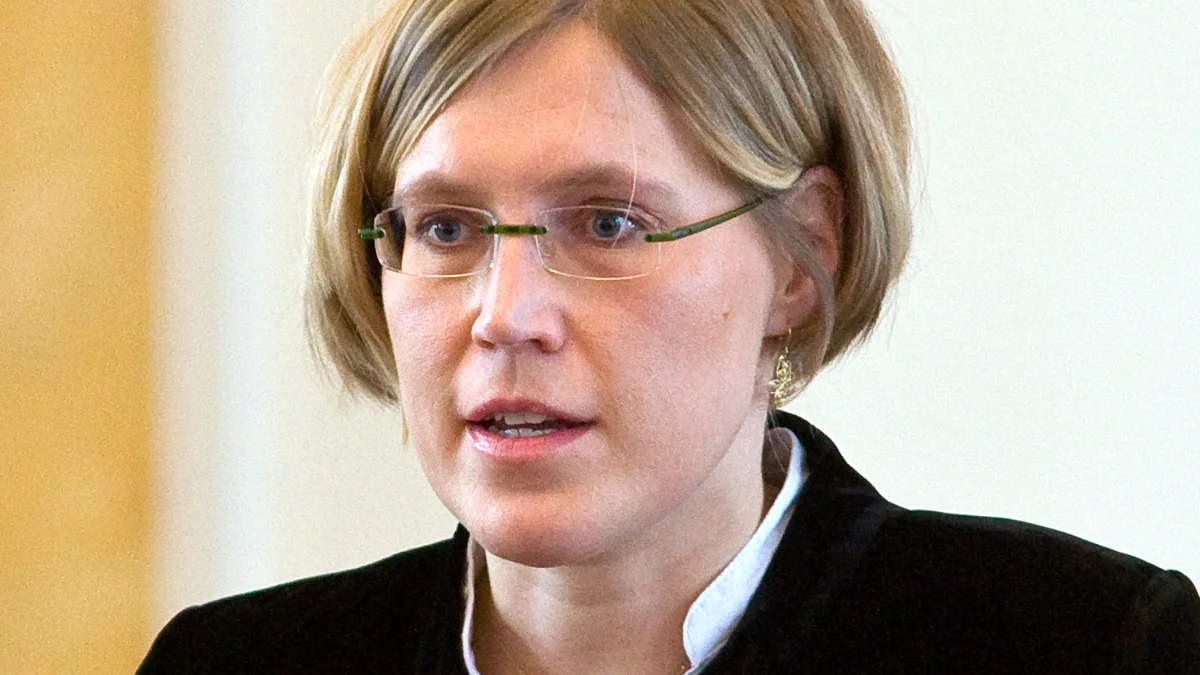
The first round of voting has only one official candidate: Chancellor of Justice Ülle Madise.
She arrives at this vote with the public backing of 75 members of the Riigikogu. They come from four different factions: the Reform Party, Eesti 200, the Social Democrats (SDE), and Isamaa. To win the presidency today, a candidate needs at least 68 votes. If you look at the paper, the arithmetic seems simple.
But the Riigikogu has 101 members, and the ballot is secret. In politics, 75 signatures on a piece of paper do not always translate into 75 votes in a closed booth. Juku-Kalle Raid spoke to Postimehe about this reality. He noted that while Madise was nominated by 75 members, that number is the "result of a major internal fight." It is a reminder that the path to those signatures was not smooth.
Today also marks the first time Estonia will use the new rules established by the 2026 legal amendments. For the first time, a candidate must stand before the parliament and give a speech of up to ten minutes. It is a new rule for a new candidate. If everything goes according to the plan on the paper, Estonia will have a president by this afternoon. If not, the calendar is already marked for what comes next.
The Sole Candidate: Ülle Madise
The National Electoral Committee officially registered Ülle Madise as a presidential candidate on August 25 at 15:00. She was the only person to reach the official registration threshold for the first round of voting. There were other names mentioned in the weeks leading up to this—Tiit Land and Mart Helme—but their names stayed on the page. They did not make it into the official register for today.
Madise's candidacy is supported by a broad coalition. The 75 members who signed her nomination papers represent more than the 68 votes required for a two-thirds majority in the 101-seat parliament. On paper, the majority is clear: 75 is greater than 68.
However, a secret ballot is not a guest list. As Juku-Kalle Raid pointed out, the "internal fight" behind those 75 names means that the support might be more fragile than it looks. The question hanging in the air at Toompea is whether every person who signed the nomination paper will actually cast their vote the same way when they are alone in the voting booth.
There were attempts to stop this process before it began. The EKRE party filed a complaint with the Supreme Court, arguing that Madise's candidacy was illegal. The Supreme Court rejected the complaint. The process continues, and Madise remains the only name on the ballot for the first round.
This is an unusual political situation. When there is only one candidate and one round of voting scheduled, you might think the result is predictable. It is not. A secret vote means that party discipline does not follow a member into the booth. Members of the Center Party and EKRE have choices: they can vote against her, they can leave their ballots blank, or they can choose to support her. No one will know for sure until the count is finished.
Today at 12:00, the number 75 will be tested. It is a number that exists on a document, but its true value can only be confirmed by the ballot box.
The New Rules: 68 Votes and Ten Minutes
The law is very specific about what it takes to become president. You need 68 votes. That is exactly two-thirds of the 101-member Riigikogu. It cannot be 67. It does not need to be 69. It is 68.
This high threshold exists for a reason. A president should not be chosen by a narrow margin or a small majority. The goal is a strong mandate—a level of support that is difficult to argue with.
Today's election is also the debut of new procedures. The 2026 amendment, known as 684 SE, changed two important things. First, the deadline for submitting candidates was moved earlier. It is now 12 to 9 days before the vote. This prevents candidates from being dropped into the race at the very last second.
Second, there is a new requirement for communication. Every candidate must now stand before the Riigikogu and speak for up to ten minutes. They have ten minutes to explain why they should represent the state.
We will see this for the first time today. Ülle Madise will step to the rostrum, she will speak, and only then will the voting begin. In previous years, this was not a requirement. The process has become more public. A candidate is no longer just a name on a slip of paper; they are a person standing in the hall, their words recorded for the public to hear.
Is ten minutes enough to judge a person's character? Probably not. But it is more than the zero minutes that used to be the standard. It is a step toward making the process visible.
75 Names on Paper, One Secret Ballot
We must go back to what Juku-Kalle Raid said: the nomination was the result of a "major internal fight." This is the core of the tension today. Collecting 75 signatures is a public act of political alignment. Casting a secret ballot is a private act of choice. At Toompea today, we will see if the public support is real.
Reporting from Delfi indicates that most politicians expect Madise to be elected in the first round. There is pressure to resolve this quickly, and the arithmetic on the paper supports that expectation. However, two parties chose a different path.
The Center Party expressed support for Tiit Land, the rector of TalTech—a man with a strong reputation and education. EKRE's council proposed Mart Helme, a familiar and trusted figure for their party. Yet, neither man was officially registered for the first round.
This was a tactical choice. Both parties are in the opposition. They knew that their candidates would not win in the first round. By not registering them now, they keep their hands free. They can vote against Madise or leave their ballots blank and wait. If the first round fails, the process moves forward, and new opportunities for nominations arise. In this system, waiting is often a tactic rather than a sign of weakness.
A secret ballot is designed so that political loyalty can diverge from public support. A faction may say "yes" in a press release, but a member may say something else in the booth. This is not a flaw in the system; it is a feature of how we protect the independence of the vote.
What Happens if Today Fails?
If Ülle Madise does not reach 68 votes today, the calendar accelerates. A second round of voting would take place on September 3 at 12:00. If that fails, a third round would happen the same day at 16:00. This is a fast pace, driven by the fact that the new president must be ready for the October 12 inauguration.
In the past, we did not have these back-to-back rounds in a single day. The 2026 amendments created this structure to provide clarity, but it also creates pressure. If the Riigikogu cannot find 68 votes across three rounds, they lose the right to make the decision alone.
On September 26, the Electoral College would be called to meet. This is a much larger body of 208 members. It includes all 101 members of the Riigikogu plus 107 representatives from local governments. This changes the math entirely. Local representatives do not always follow the party lines established in the capital.
The opposition knows this. By waiting, parties like EKRE and the Center Party are looking toward that potential shift in dynamics. Every member voting today knows that if they fail to reach a decision, the power moves away from Toompea and out into the rest of the country.
The Goal: October 12
All the numbers we are discussing today—the 75 signatures, the 68-vote threshold, the 10-minute speech—are tools to reach a single moment. On October 12, 2026, a person will stand up and swear to defend the constitution and the laws of the Republic of Estonia.
The people of Estonia look to the president for symbols and for a backbone. The president does not write the laws; that is the work of the people in the Riigikogu. But the president provides the words that remain. They provide a clear position on our defense and our security. Sometimes, the most important thing a president can do is speak loudly about what is right.
The new rules have made this a more public test. A candidate must now stand and be seen before the vote. Whether the 75 names on the paper become 68 votes in the box is a question that only the results will answer. Today at 12:00, we get the numbers. On October 12, we get the meaning.
Watch the results today. And on October 12, listen to the oath.