
Estonia is committing €20 million to a strategic AI computing initiative through the EuroHPC joint procurement. This investment, targeting the 2028–2032 window, shifts the nation from a passive service consumer to a sovereign infrastructure operator, aiming to double labor value by 2035 through localized large-scale model training and high-density hardware access.
The Sovereignty Shift: From Digital Image to Physical Control
For a decade, Estonia has successfully exported the image of a borderless, frictionless digital society, yet this reputation has rested almost entirely on software layers hosted on foreign-owned stacks. The Ministry of Justice and Digital Affairs’ recent pivot toward sovereign computing power exposes the contradiction between our digital ambitions and our physical dependency. It marks a fundamental shift in institutional behavior: a move from merely consuming global AI services to owning the means of their production.
If the last decade was defined by cloud migration, the emerging paradigm is defined by the hardware frontline. The planned procurement signifies a transition from general-purpose computing to specialized AI architecture, aimed at securing European technological independence. In this new world order, state strength is increasingly measured by direct access to specialized GPU clusters rather than the mere sophistication of its web portals.
This shift requires a total rewriting of the old order, where data processing power is treated as a strategic commodity equivalent to energy or food security. By participating in large-scale joint procurements, the state is acknowledging that national security and AI development are now inextricably linked. Institutional intervention is no longer optional; it is the necessary foundation upon which the private sector must build its next generation of DeepTech solutions.
Brutal Physicality: The Role of Private Infrastructure in Hüüru
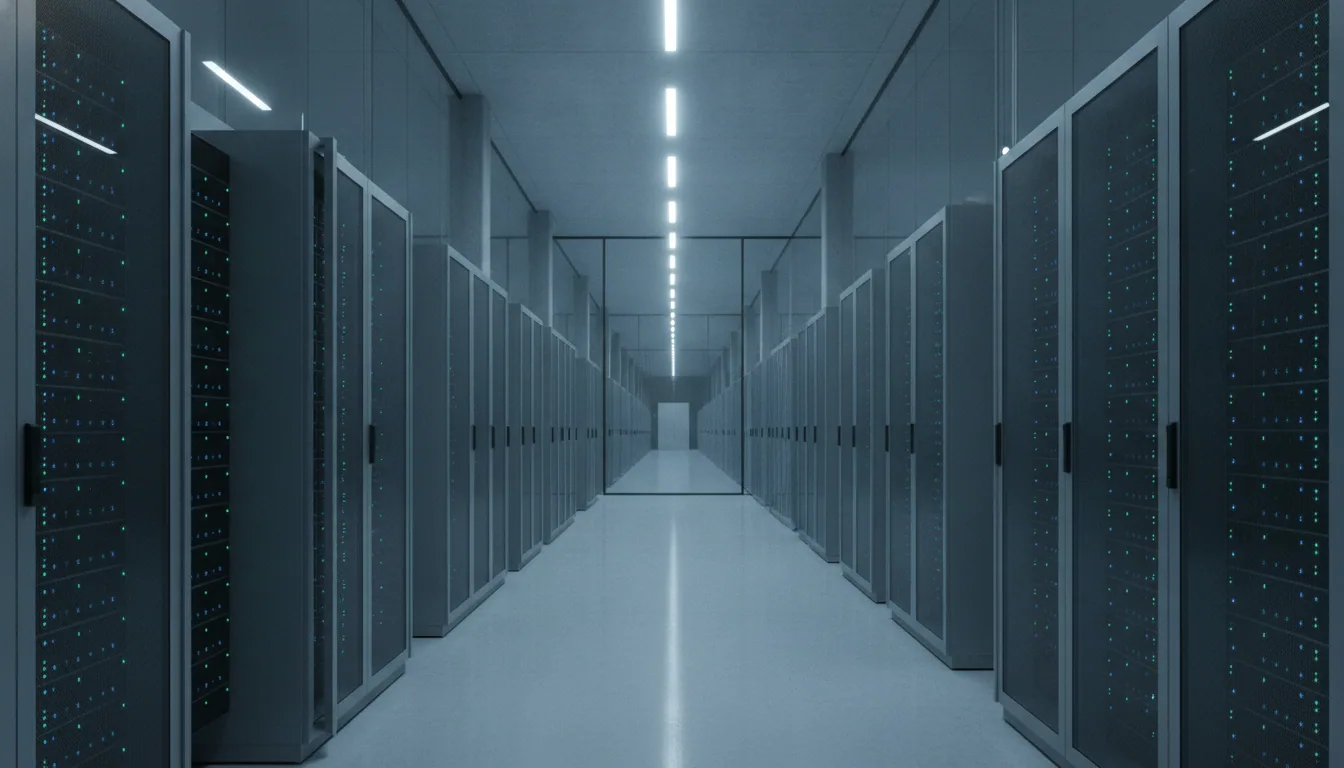
In the era of generative AI, digital capability is becoming paradoxically and brutally physical. The infrastructure rising in Hüüru, near Tallinn, no longer represents a simple server room; it is the new heavy industry of the 21st century, requiring massive power density and sophisticated thermal management. Without this physical substrate, the state's ambition for a sovereign AI blueprint remains a theoretical exercise.
While local capital is often characterized by its conservatism, Estonia’s leading entrepreneurs have signaled a change in behavioral patterns by injecting nearly €100 million into AI-ready data center developments. This contribution, part of Greenergy Data Centers’ regional expansion, reflects a cross-border correlation between state strategy and private risk-taking.
There is a clear synergy emerging: as the state allocates millions to procure computing hours, facilities like Hüüru provide the environment necessary to sustain that load. Training large language models (LLMs) requires a level of energy density that legacy data centers simply cannot support. This alignment suggests that the old boundaries between public mandate and private utility are blurring in favor of a unified strategic direction.
The Hardware Frontline: Converting Theory into Economic Leverage
Estonian academic ambition has frequently collided with the constraints of the physical world, where world-class hypotheses are often left idling in global computing queues. The University of Tartu’s recent acquisition of next-generation NVIDIA H200 and L40S processors—a €3.2 million investment—is designed to break this bottleneck. This is not just a laboratory upgrade; it is a paradigm shift where scientific capacity becomes a direct lever for national competitiveness.
By enhancing the 'Rocket' cluster, Estonia is creating a bridge between resource-heavy model training and real-time inference. This hardware frontline ensures that AI solutions evolve from academic papers into deployable software. Furthermore, through the LUMI supercomputer consortium in Finland, Estonia is demonstrating how a small state can operate in the 'giga-scale' league through strategic cross-border collaboration.
Hardware, however, remains only one variable in the equation. The strategic question is not just whether we have the processors, but how rapidly we can convert this computational mass into an economic engine. If we fail to synchronize academic output with this new physical capacity, we risk owning an expensive engine with no fuel.
The Baltic GigaFactory: A Regional Shield Against Periphery Risk
Estonia’s digital autonomy currently survives at the mercy of foreign server farms. To address this vulnerability, the Baltic AI GigaFactory project—a massive €3 billion regional initiative—proposes a sovereign technological shield. The vision of 100,000 high-end processors connecting Tallinn, Riga, and Warsaw is the 21st-century equivalent of regional electrification.
Entrepreneurs are no longer waiting for Brussels-led regulations; they are demanding the hardware that allows them to train models locally. Without this capacity, Baltic startups are destined to remain mere 'data-feeders' for global tech giants. Estonia’s projected contribution of €30 to €50 million acts as 'smart seed capital' that unlocks access to billions in collective regional capability.
This approach proves that national security and economic agility are now indistinguishable. Estonia sits at the heart of a new global AI geopolitics where the victors are determined by their FLOPS (floating-point operations per second). The regional network effect must transform Estonia from a peripheral digital observer into the strategic intellectual fuel for the entire Baltics.
The 2035 Socio-Economic Blueprint
Estonia’s transition to a high-wage economy necessitates a systemic adaptation comparable to the industrial revolutions of the past. The national 'Eesti.ai' program, which aims to double the value of labor by 2035, treats computing power as the fundamental raw material of the modern age. In this new economic space, a nation's competitiveness is dictated by its ability to process information at scale.
Programs like the DeepTech grant and large-scale investment supports are critical tools for reshaping institutional behavior. Whereas previous strategies supported fragmented, small-scale developments, the current trajectory favors the massive scale required to survive international competition. Rewriting the old order requires that deep-tech development and state capital move in perfect synchrony.
This shift serves as a catalyst, activating a new dynamic between private capital and scientific research. The long-term success of this socio-economic plan depends on our ability to convert expensive electricity and silicon into social welfare. If we fail to integrate this infrastructure into our social capital, we remain a mistake in someone else’s value chain. The investment in AI computing is therefore not a luxury—it is the critical step toward securing a seat at the table of the new world order. The question for the state remains: how quickly can we turn this raw power into a permanent competitive advantage?