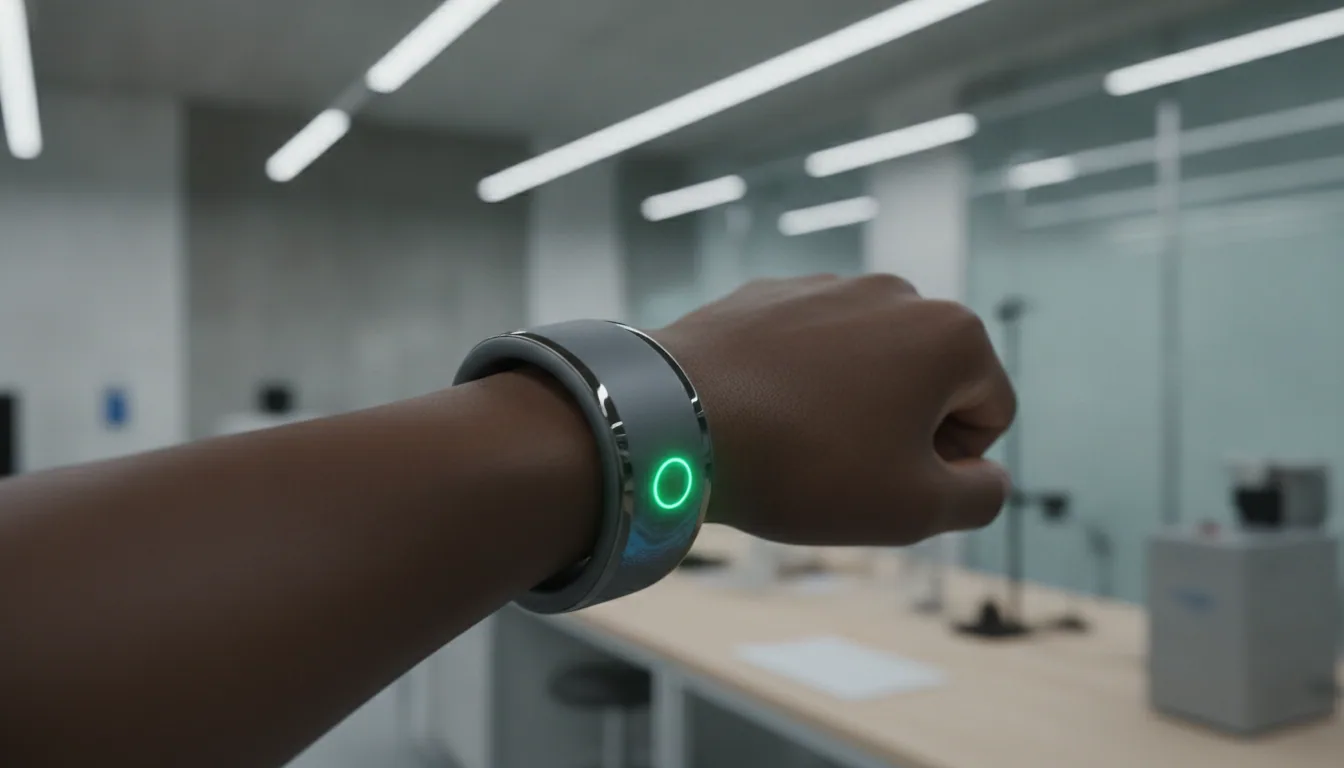
The ethics of bio-predictive wearables are currently being defined by a pivot from fitness tracking toward clinical-grade diagnostics. We possess more biometric data than any generation, and the market is projected to reach 103.1 billion USD by 2026. AI systems now predict strokes with 94% accuracy.
Navigating these technologies requires balancing life-saving potential against the risk of permanent biometric exploitation and systemic biological bias.
The Shift from Quantified Self to Clinical Forecasts
While the first decade of consumer wearables focused on step-counting and sleep scores, the emerging paradigm is pivoting toward clinical-grade diagnostics. Medical hardware companies are aggressively moving beyond recreational tracking to identify life-threatening conditions. Alva Health, a Yale spinout, recently secured a 500,000 USD National Science Foundation grant to scale an AI wristband for real-time stroke prediction.
If these systems can identify high-risk windows with the 94% accuracy demonstrated in recent clinical trials, the traditional divide between consumer electronics and medical intervention effectively vanishes. This precision relies on a sophisticated mapping of digital biomarkers. Heart Rate Variability (HRV) has evolved from a niche fitness metric into a critical biomarker for predicting biological age.
Technical hurdles are falling as Kalman filter-assisted data prediction has reduced power consumption in these monitors by 50.3%. In the Estonian context, this shift demands a total re-evaluation of institutional behavior. If the state can harness this accuracy, we move toward a paradigm of constant, pre-symptomatic forecasting.
The Regulatory Re-Alignment: Governing High-Risk Bio-Intelligence
Sophisticated bio-predictive hardware often reaches the consumer market years before the legal systems designed to oversee it can even define its function. The EU AI Act, effective since August 1, 2024, addresses this by classifying AI-enabled medical wearables as high-risk systems subject to rigorous scrutiny. Compliance with these data governance requirements becomes mandatory for global manufacturers by August 2026.
Technical interoperability must evolve beyond the simple exchange of raw data packets. The IEEE 2933 Standard for Clinical IoT provides a necessary socio-economic blueprint through the TIPPSS framework. This ensures a heart rate monitor in Tallinn operates under the same ethical and safety protocols as one in Berlin.
The emerging paradigm of bio-intelligence demands forensic readiness that current AI watermarking methods, such as SynthID-Text, fail to provide. These digital watermarks do not meet the Daubert admissibility criteria required for court evidence. Furthermore, rewriting the old order of medical regulation requires assessing how institutional behavior must adapt to pre-symptomatic disease disclosure.
We must decide if the heartbeat remains a private rhythm or becomes a public record in the upcoming era of bio-surveillance.
The Ethics of Bio-Predictive Wearables and the Melanin Barrier
High-resolution AI analysis often meets the rudimentary physics of light absorption, creating a digital divide based on human biology. Photoplethysmography (PPG) sensors exhibit significantly lower accuracy when interfacing with Fitzpatrick Scale V-VI skin tones. According to research published in Nature, the hardware intended to democratize healthcare remains fundamentally optimized for lighter pigmentation.
For users with darker skin, wearables may underestimate heart rate by 10 to 15 beats per minute during rest. This represents a systemic failure where manufacturers have baked an equity gap into the emerging paradigm. Relying on the Fitzpatrick Scale, a tool designed for dermatology rather than optical physics, compromises the accuracy of clinical-grade predictive models.
In the Estonian context, these discrepancies threaten the long-term integrity of national biometric data pools. If we deploy hardware that produces biased raw data, our models will inevitably mirror these systemic errors. Policy makers must ensure that bio-predictive equity is not physically obstructed by the sensors themselves.
The Erosion of Anonymity: Re-identification and Data Exploitation
The promise of digital privacy often meets the reality of predatory and systemic data harvesting. In May 2025, Covered California faced a class-action lawsuit for allegedly sharing sensitive pregnancy statuses with Google and LinkedIn. This institutional behavior exposes a gap between legislative intent and the granular technical reality of third-party tracking.
The FTC recently fined GoodRx 1.5 million USD and BetterHelp 7.8 million USD for unauthorized sensitive health data sharing. These cases signal a shift where health data is treated as a sensitive category regardless of official HIPAA status. While companies claim anonymity, the IAPP has demonstrated that raw heart rate and gait patterns can be re-identified.
If our physiological signatures are as distinct as a DNA sequence, the promise of anonymity is a functional myth. In Estonia, the cross-border correlation of this data raises significant sovereignty concerns for integrated digital infrastructure. A single leak of biometric gait patterns could compromise a citizen’s privacy forever.
Predictive Ethics: Rewriting the Old Order of Workplace and Care
Corporate wellness programs often promise peak performance while quietly dismantling the traditional boundaries of bodily autonomy. In January 2025, the EEOC issued stern warnings against institutions using bio-predictive data to penalize employees. As hardware evolves, the legal framework must pivot from protecting past actions to governing future probabilities.
If an algorithm predicts a stroke with 94% accuracy, the burden of disclosure shifts to a systemic liability. To manage this weight, institutional leaders are forming Predictive Ethics Committees to navigate pre-symptomatic discovery. Transparency requires more than a simple opt-out button; it requires permanent and visible AI-generated health disclosures.
In the Estonian context, we must ask if our legal norms are ready for this shift toward constant bio-surveillance. The state must move from being a passive observer to an active guardian of digital biomarkers. The ethics of bio-predictive wearables require us to ensure the "quantified self" does not become the "commodified self" under the weight of predictive exploitation.