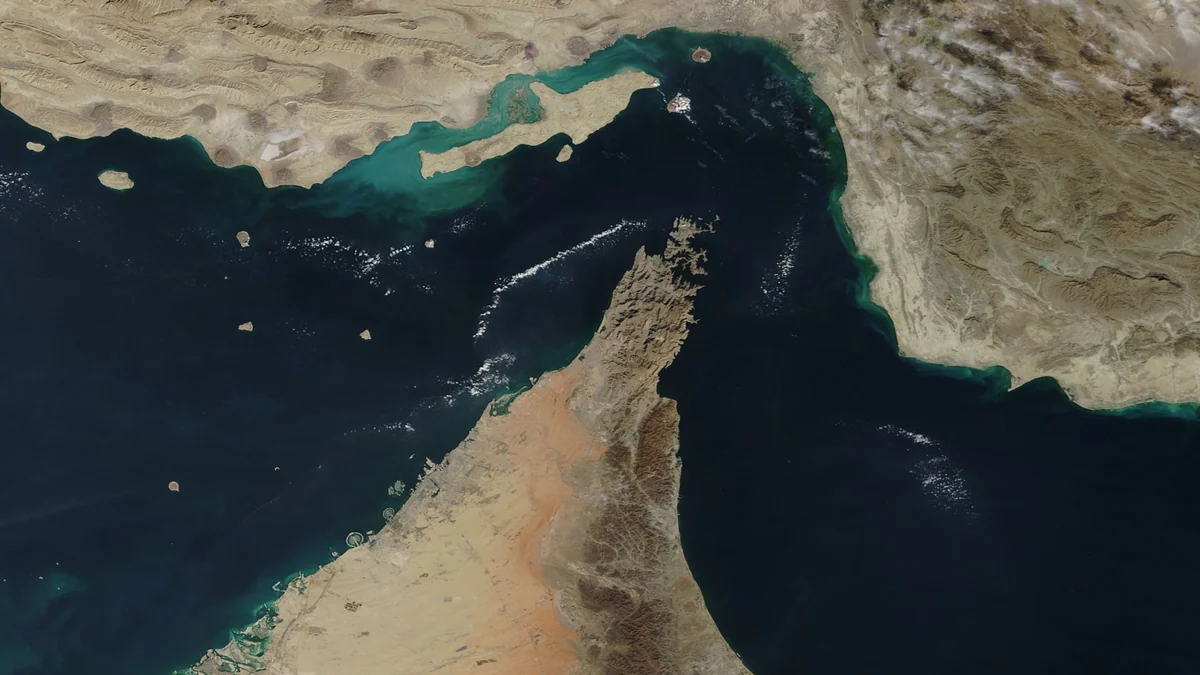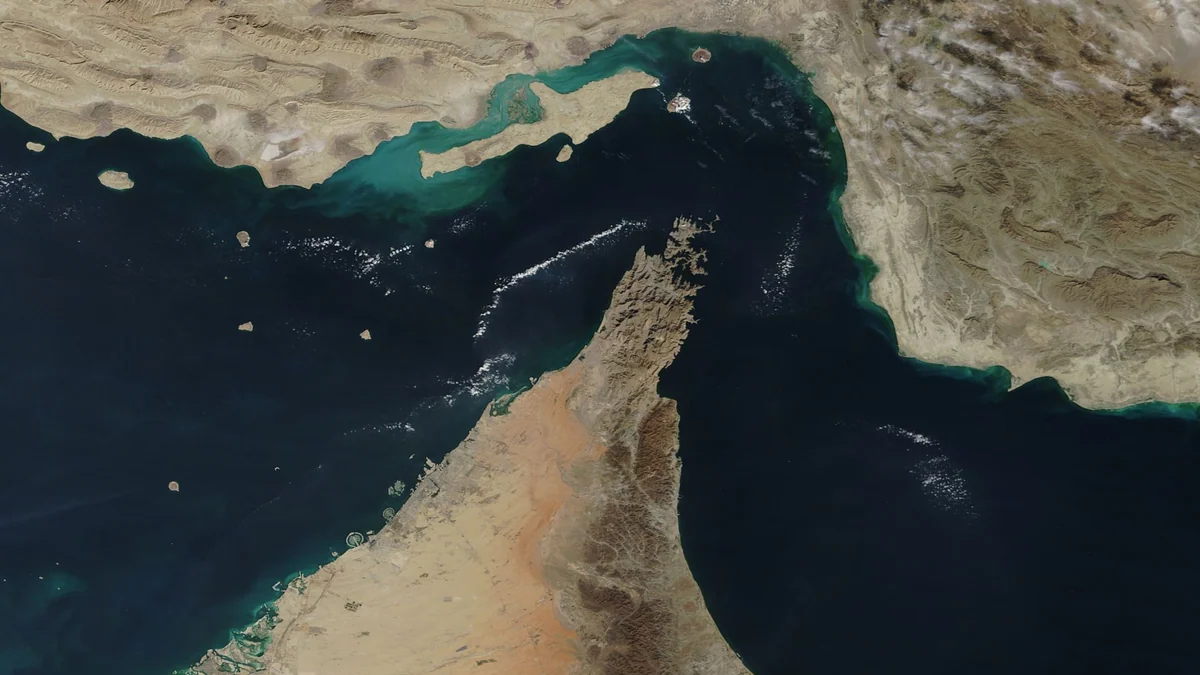
The Oman Exception and the price of oil represent a critical intersection where territorial sovereignty meets the urgent global need for stable energy logistics. Roughly 20 % to 30 % of daily global oil consumption flows through the Strait of Hormuz, a single, narrow maritime artery. This physical bottleneck exposes a dangerous correlation between regional military posturing and the systemic stability of the modern world.
The Oman Exception provides a legal workaround to these bottlenecks by establishing a neutral corridor that prevents regional conflict from dictating global energy costs. The conflict that erupted in February 2026 served as a brutal stress test for our existing socio-economic blueprint. During the peak of hostilities from February through May, Brent oil prices surged past the $100 per barrel threshold.
This was more than a localized disruption; it was a fundamental rewriting of the old order that threatened to bankrupt distant industrial sectors. Institutional behavior during this period initially gravitated toward opportunistic monetization rather than diplomatic resolution. Before the recent diplomatic breakthrough, reports indicated that both Iran and Oman were considering the implementation of mandatory service fees for any vessel attempting the crossing.
Such speculation indicated a paradigm shift where maritime passage was being reclassified from a global right into a private toll-gate. In the Estonian context, these global shifts directly dictate local heating costs and the survival of export-oriented manufacturing. The failure of the old maritime order necessitates a more pragmatic, data-driven approach to energy security and legal norms.
The Oman Exception: Engineering a Multi-Modal Legal Corridor
Rigid maritime borders meet the urgent necessity of trade flow, forcing a rethink of traditional territorial dominance. On June 24, 2026, Oman and the International Maritime Organization (IMO) formally introduced the "Oman Exception" maritime corridor. This initiative represents an emerging paradigm of neutral maritime mediation.
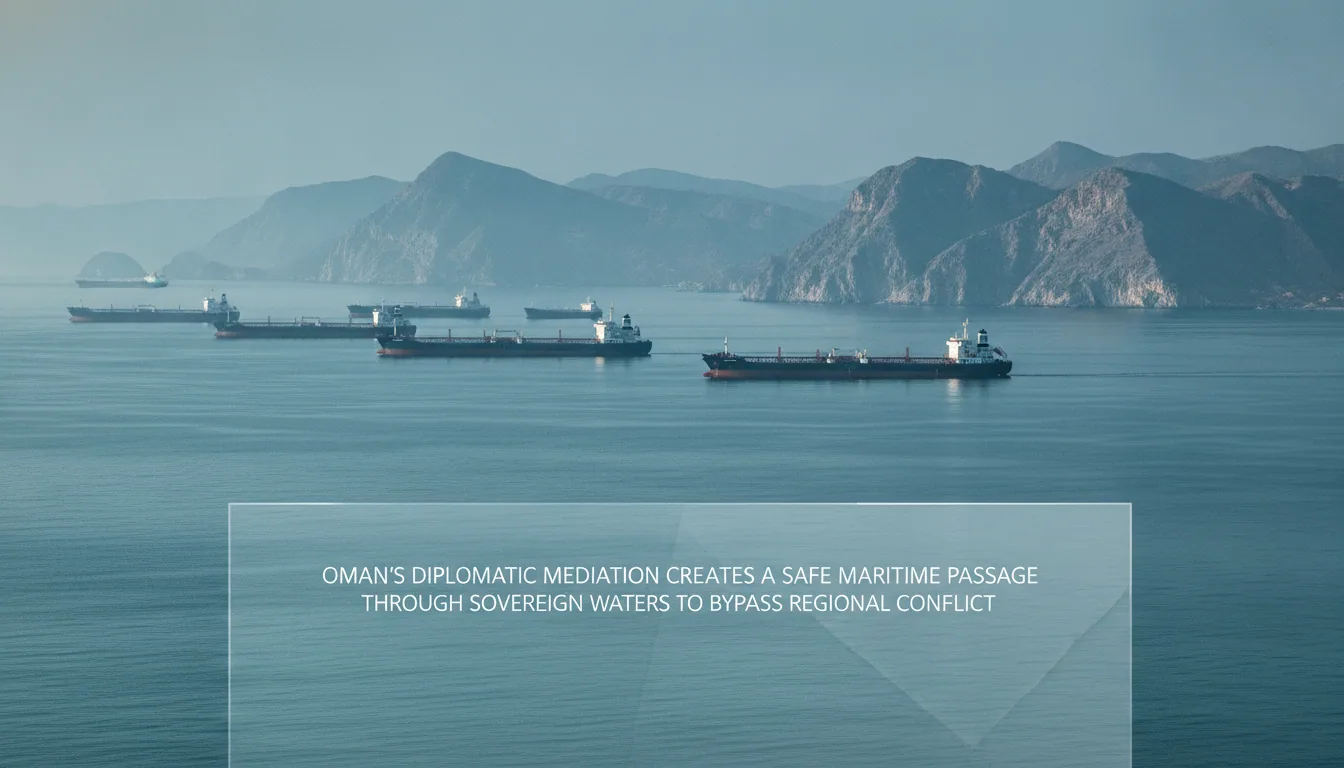
High-tech naval vessels stood paralyzed while the world’s most critical trade lane became a static parking lot for merchant ships. The resulting phased evacuation plan now addresses the immediate welfare of 11,000 sailors. Following specific EASA recommendations for regional safety, this multi-modal approach ensures that institutional behavior prioritizes global logistics over localized disruption.
Data confirms that approximately 500 to 600 vessels were effectively immobilized in the Strait of Hormuz before this diplomatic breakthrough.
The engineering of this corridor utilizes a strategic "southern route" through Omani territorial waters, deliberately bypassing zones under Iranian control. This allows for a cross-border correlation of safety protocols that standard international shipping lanes currently cannot provide. By re-routing traffic through these specific sovereign waters, the IMO and Oman are effectively rewriting the old order of maritime transit.
This socio-economic blueprint for mediation suggests that the future of global trade depends on the willingness of neutral actors to provide physical alternatives. In the Estonian context, where maritime security is a pillar of national resilience, such a paradigm shift in legal corridors warrants close study. If territorial waters can be repurposed as neutral bridges, we may see more states utilizing sovereignty as a service rather than a weapon.
Behavioral Mapping: The Oman Exception and the price of oil
Financial markets frequently prize the certainty of conflict over the messy nuance of diplomatic de-escalation. On June 24, 2026, the announcement of the Oman Exception and the price of oil shattered this trend by providing a concrete mechanism for maritime stability. Brent crude prices immediately fell below $74 per barrel, while WTI crude dropped 5 % in a single day to settle below the $70 mark.
This market reaction demonstrates a clear cross-border correlation between regional diplomacy and global energy benchmarks. While the June 17 memorandum in Switzerland set the stage, the actual resumption of traffic density serves as the primary metric of institutional trust. Shipping activity has reached its highest level in several weeks, bolstered by Oman’s decision to waive transit fees.
The data reveals a stark reality. We are witnessing the emerging paradigm where legal workarounds, rather than traditional naval dominance, now dictate international price floors. With 70 % of global oil reserves already in use, the socio-economic blueprint of most nations relies on a dangerously narrow 30 % buffer for survival.
Institutional Friction: The IRGC and the Erosion of Norms
The polished wood of a Swiss conference table meets the salt-sprayed reality of an aircraft carrier’s flight deck. On June 17, 2026, negotiators finalized a 60-day Memorandum of Understanding in Switzerland to pause the escalating naval hostilities. This brief diplomatic window provided the breathing room necessary to address a crisis that had already trapped hundreds of merchant vessels.
The Islamic Revolutionary Guard Corps (IRGC) soon challenged this transition by declaring the new Omani transit routes "unacceptable." Their command centers, buzzing with the hum of electronic warfare suites, signaled that any deviation from Iranian-designated paths would be met with immediate warnings. This behavior suggests a strategic desire to maintain a high-friction environment regardless of international consensus.
This stance represents a significant rewriting of the old order where international waters were once considered a shared global common. US Secretary of State Marco Rubio responded with characteristic bluntness, stating the US rejects any nation’s claim of sovereignty over the Strait of Hormuz. In the Estonian context, we recognize this as a critical test of whether the rules-based order can survive the ambitions of regional hegemons.
Against this backdrop, Omani Foreign Minister Sayyid Badr bin Hamad Al Busaidi offered a stabilizing socio-economic blueprint. He confirmed that Oman will not charge transit fees for the use of the corridor, effectively choosing global stability over short-term revenue. This decision creates a cross-border correlation between Omani neutrality and the survival of the global energy supply chain.
The Depleted Buffer: Socio-Economic Vulnerability
Advanced technological sophistication often masks the primal fragility of our global supply chains. According to Tarmo Kärsna of Alexela, nearly 70 % of global oil reserves are currently in use, leaving a mere 30 % as a remaining buffer for future shocks. This tightening of the socio-economic blueprint signals a paradigm shift where the margin for strategic error has essentially evaporated.
The "Oman Exception" now functions as a pragmatic legal workaround to bypass the institutional behavior of disruptive actors. While this corridor has successfully pulled Brent prices back below the $74 mark, it remains a fragile diplomatic tether. Unlike the robust strategic reserves of the Cold War era, our current stability is reliant on the neutrality of a single sultanate and a temporary 60-day MoU.
In the Estonian context, this cross-border correlation reveals a reality where local price stability is one regional skirmish away from collapse. The 30 % reserve buffer highlighted by Kärsna provides little comfort when 20 % to 30 % of global oil consumption is so easily weaponized. We are witnessing the rewriting of the old order, where energy security is no longer a commodity to be bought, but a legal corridor to be negotiated.
Ultimately, the Oman Exception and the price of oil serve as a temporary fix for a much deeper resource problem, managing symptoms without addressing the underlying depletion of global energy safety nets. If the world continues to operate on such thin margins, the traditional institutional boundaries between law, economics, and security must be re-evaluated. Does Estonia have the data-driven foresight to navigate a future where scarcity is the norm, or will our economic stability remain hostage to the next maritime exception?