
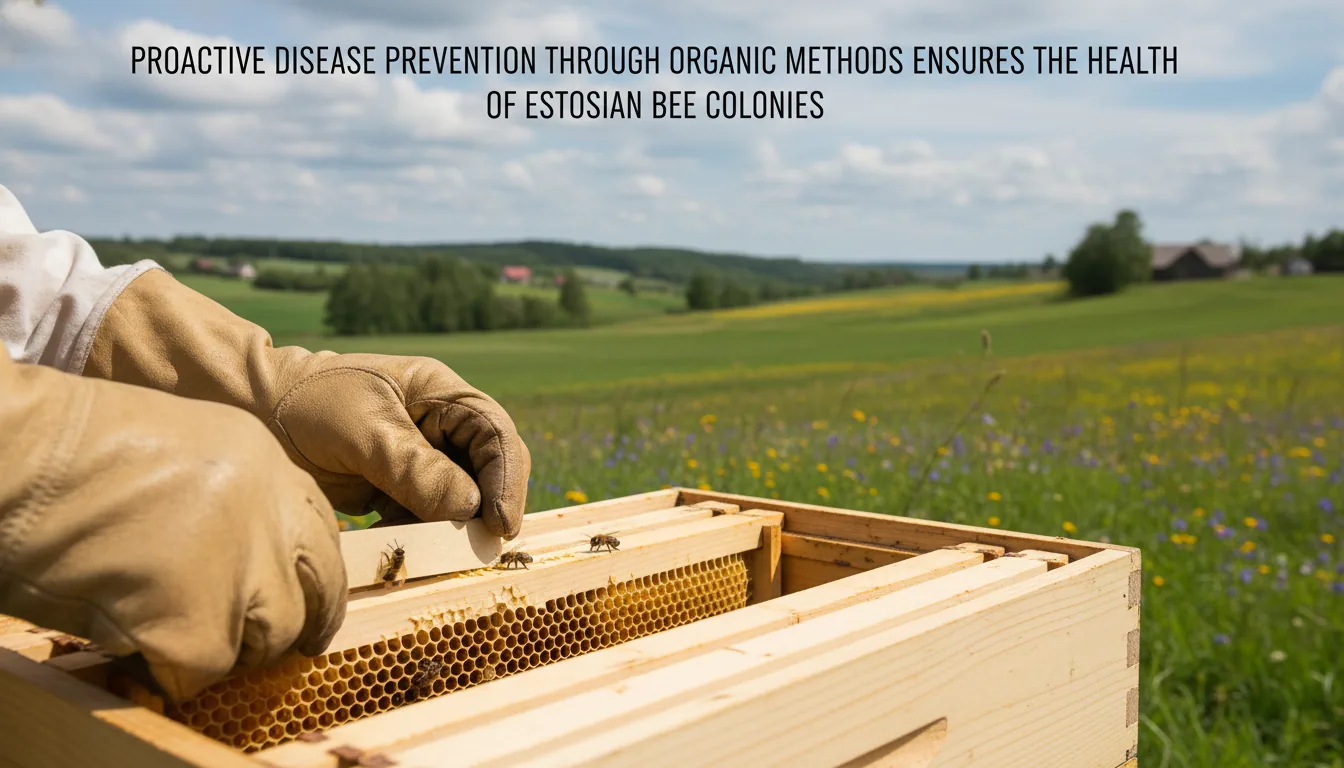
In the world of beekeeping, a 10% winter loss is not a failure; it is a benchmark of a system that actually works. While many countries are currently mourning the loss of a third of their colonies, Estonia has managed to keep its baseline stable through a combination of data-driven monitoring, organic interventions, and a mandatory registry that functions as a genuine biosecurity lever.
The Lever: Free Thymol and the 10% Ceiling
This 10% figure is not a stroke of luck. It is evidence that a systematic approach to biological risk pays off. In 2025, the Estonian Beekeepers' Association distributed free thymol strips for varroa mite control. This wasn't just a handout; it was a targeted push to move keepers away from synthetic chemicals toward organic acids.
Here is the honest scorecard: organic treatments like thymol are more demanding. They require precise temperature windows and a deeper understanding of colony biology than old-school synthetics. But for a beekeeper with ten hives, this rigor means nine of them are flying come spring. When we choose organic acids over cheaper, harsher synthetics, we aren't just making a gesture. We are investing in a system that is measurably cleaner and more resilient.
The Real Risk: Not Vague Toxins, But Specific Parasites
The greatest pressure on Estonian bees isn't a vague "environmental decline." It is a very specific parasite: Varroa destructor. This mite doesn't just feed on bees; it shatters their immune systems, opening the door for viruses that a healthy colony would otherwise handle. It is a systemic biological risk, not a random act of nature.
We are also seeing the data-driven reality of resistance. Synthetic treatments like fluvalinate are losing their edge, becoming a sunk cost that offers only a false sense of security. The harder threat is American Foulbrood (AFB), a bacterial disease whose spores can wait in the soil for decades. There is no "natural" fix for AFB. When it is detected by the LABRIS laboratory, the only working solution is to destroy the infected colony and sterilize the equipment. An unregistered or "anonymous" beekeeper in this scenario isn't just a hobbyist; they are a biological risk factor to every hive in their five-kilometer radius.
The Registry: Data as a Safety Net
Every May 1st, Estonian beekeepers are required to report their colony numbers to the PRIA registry. It feels like bureaucracy. In reality, it is the foundation of our national biosecurity. If American Foulbrood is detected in a village, the Agriculture and Food Board uses this data to map the infection and warn neighbors. Without the map, we are flying blind.
Data also saves bees from acute poisoning. In 2023 and 2024, incidents in Muuga and Viljandi showed that when a hive's location is on the map, the beekeeper can be notified of nearby pesticide applications in real time. Despair about bee losses is often just procrastination with better PR; registering your hives is the actual work of protection.
The Catch: It's Often the Garden, Not the Farm
We often point the finger at industrial agriculture, but the data tells a more complicated story. In May 2024, beekeepers in Viljandi found thousands of dead bees outside their hives. Laboratory tests confirmed cypermethrin—a neurotoxin that leaves zero chance of survival.
Even more telling was the 2023 Muuga incident. The culprit wasn't a massive rapeseed field; it was home gardeners using ant poison incorrectly. Fipronil-based products, applied without reading the label, wiped out entire neighborhood apiaries. This is where the needle actually moves: a small, honest choice at the garden center is more effective than any slogan.
The Scorecard: What Actually Works
Estonian beekeeping has moved from a culture of emergency aid to a culture of technical discipline. Our 10% winter mortality rate is exemplary in Europe, but it is a fragile victory. To keep it, we have to respect the trade-offs.
The honest scorecard for a resilient apiary:
- Registry over Privacy: Registering hives with PRIA is the only way to be part of the safety net.
- Organics over Synthetics: Use organic acids (thymol, oxalic) despite the extra effort; mites are already winning the race against synthetics.
- Lab Results over Guesswork: If your bees are dying, send samples to LABRIS. You cannot solve a problem you haven't measured.
- Individual Responsibility: If you are a gardener, the instructions on the ant poison bottle are not suggestions. They are the difference between a clean yard and a dead colony next door.
We don't need more theater about the environment. We need more people following the map we've already built.