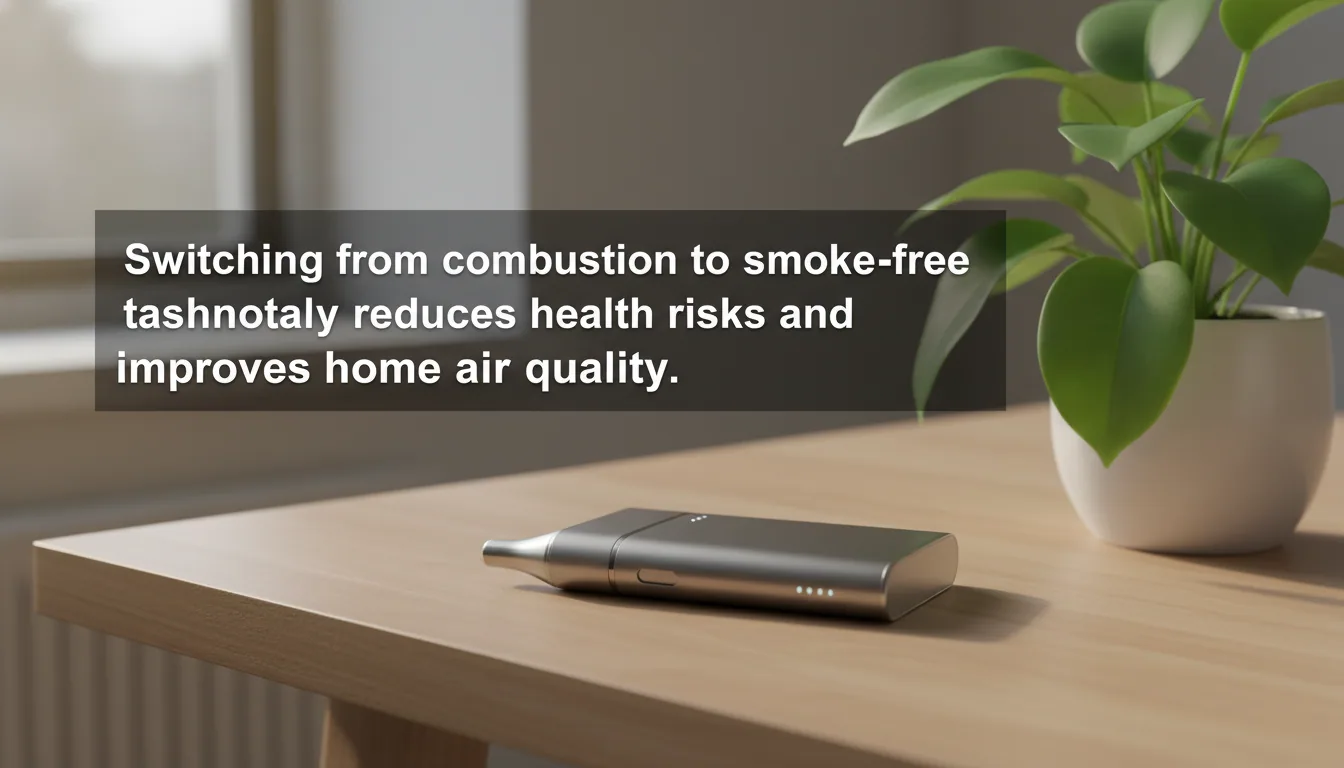

In 2025, Sweden's daily smoking rate fell to 3.7%, making it the first nation to officially cross the 5% "smoke-free" threshold. This success was not built on miracles or slogans, but on a pragmatic harm-reduction strategy: allowing smokers to switch to alternatives that are measurably 95% less harmful than combustible tobacco.
The Swedish Lesson: How 5% became a reality
Internationally, a country is considered smoke-free when its smoking population drops below 5%. Sweden has now moved well past that mark, outperforming nations that rely solely on bans and fear-based campaigns. This is a real, numerical fact that proves harm reduction is a functioning lever, not just a theoretical gesture.
Sweden's success is built on a long-term strategy of replacing combustible tobacco with snus and modern smoke-free products. Representatives from Smoke Free Sweden note that this success is an uncomfortable reality for those who prefer strict prohibitions over practical alternatives. The Swedish experience dismantles the "all or nothing" approach that has historically left smokers without the support they actually need to quit.
This isn't just about labels. When you consider that there are 1.2 billion smokers globally and 8 million premature deaths annually, the Swedish rate is a clear sign of a scalable solution. It simply requires the courage to trade political ideology for controlled data and human habits. Despair is just procrastination with better PR; the Swedish example proves we don't have to wait for a utopian future. We can move toward a smoke-free society today by choosing pragmatic, measurable gains over outdated dogmas.
The science behind the switch: Lever or gesture?
Public Health England provides a figure that remains a cornerstone of this debate: vaping is at least 95% less harmful than smoking traditional cigarettes. This isn't an emotional claim; it's based on toxicological analysis. When you remove combustion, you remove thousands of carcinogens from the equation.
Nicotine is addictive, but the combustion products of tobacco smoke are what cause the disease. This is the critical distinction between a policy gesture and a real lever. Smoke-free products like e-cigarettes and nicotine pouches allow for nicotine delivery without the tar and carbon monoxide.
Cochrane Reviews, perhaps the most trusted source of medical evidence, has confirmed that e-cigarettes are more effective for smoking cessation than traditional patches. For the 220,000 smokers in Estonia, every step away from combustible tobacco is a measurable reduction in life risk. For an ordinary household, this transition means cleaner indoor air and, in the long run, significantly lower healthcare costs.
Home air and the "One Switch" win
World Vaping Day 2026, observed on May 30, carries the theme "One Switch — Everyone Wins." This isn't a hollow slogan; it refers to a tangible social and health victory. The World Vapers' Alliance (WVA) is focusing this year on improving indoor air quality through pragmatic choices.
Smoking on the balcony is often a half-measure. Toxic residues travel back into the living space on clothing. The real lever is the total replacement of the combustion process. Passive smoking is a proven risk factor for asthma, bronchitis, and pneumonia in children, placing a heavy burden on families and the national healthcare system.
Liza Katsiashvili, operations manager at the WVA, emphasizes that the transition to alternative products is a major social win. We aren't waiting for an overnight nicotine-free world; we are acting where the impact on daily well-being is highest. The honest scorecard tells us that while nicotine is the hook, the smoke and tar are the killers.
The 2026 regulatory friction
In Brussels, Michael Landl looks at a calendar where May 31, 2026, is marked in red. That is the WHO's World No Tobacco Day, often a platform for new restrictions on e-cigarettes. For experts like Landl, this regulatory pressure reflects a dangerous disregard for reality.
World Vaping Day falls exactly 24 hours earlier. This proximity is a deliberate confrontation between bureaucratic dogma and the lived experience of millions. Data shows that in countries like Sweden, the UK, and New Zealand, smoking rates are falling significantly faster than in places that rely on rigid bans. That isn't a gesture. That is a lever that changes public health statistics without the need for scolding.
An honest accounting shows that 1.2 billion smokers need accessible alternatives, not regulatory hurdles. We have the evidence-based technology to make smoking history, provided we stop sacrificing working solutions for the sake of ideological purity.
The Estonian Scorecard: 220,000 smokers and the path forward
Eight million deaths a year globally is a number larger than the population of the Baltic states combined. In Estonia, 220,000 people still smoke. That means nearly every second family has someone who needs a functional exit ramp from combustible tobacco.
This is where harm reduction moves the needle. Organizations like NNA Smoke Free Estonia and its CEO, Ingmar Kurg, are filling the gap by informing consumers about choices that actually work. They aren't performing social theater; they are handing people a map and a compass.
Historically, tobacco policy has been an "all or nothing" game. Sweden proved that when you offer less harmful nicotine products, smoking rates drop faster than under strict prohibitions. That is the difference between the rhetoric and the result.
The honest scorecard:
- The size of the problem: 8 million global deaths annually and 220,000 Estonian smokers.
- The working solution: Pragmatic harm reduction via smoke-free alternatives (95% safer).
- The catch: Nicotine remains addictive, and the solution requires moving past political dogma.
- What moves the needle: Policymakers must recognize harm reduction as official health policy. This isn't a gift to an industry; it's a way to save thousands of lives and millions in healthcare costs. It is an investment that pays off in every home where smoke is replaced by cleaner air.