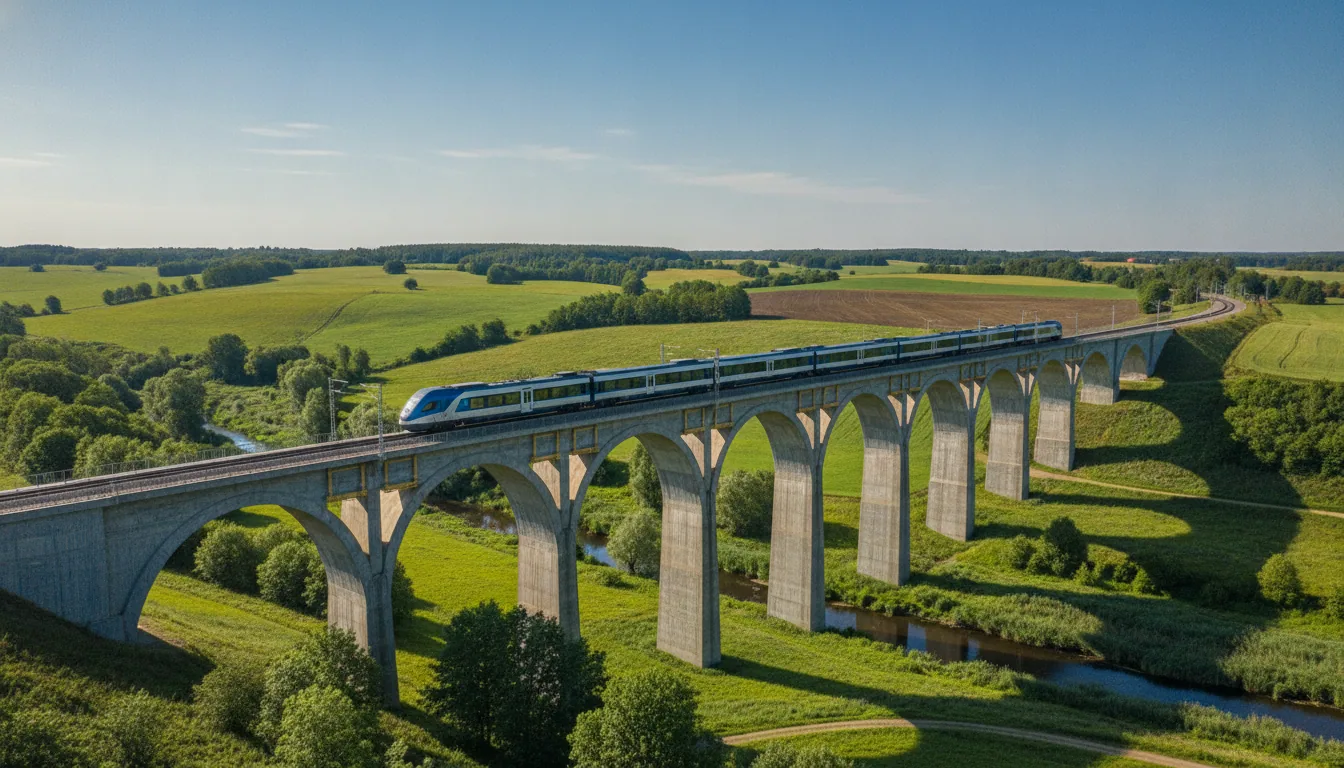
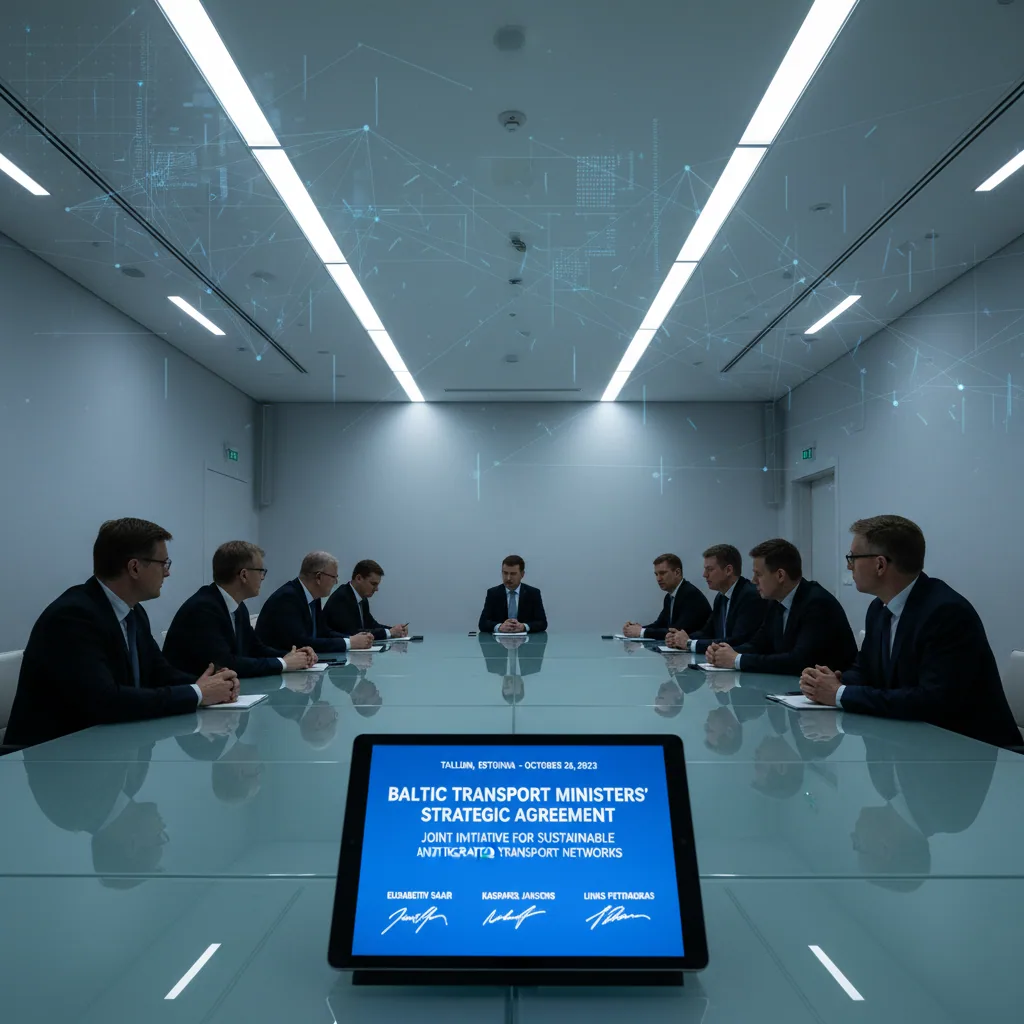
The Baltic states exist in a strange temporal dissonance where the world’s most advanced digital governments remain physically tethered to the infrastructure of a legacy empire. At a recent summit in Tallinn, the transport ministers of Estonia, Latvia, and Lithuania signaled that this paradox is reaching its expiration date. With over 100 kilometers of the Rail Baltica mainline now under active construction, the region is moving beyond diplomatic formalities toward a hard-coded integration with the European ecosystem.
The Institutional Shift: From Rails to Resilience
For years, the discourse surrounding Rail Baltica was bogged down by bureaucratic inertia and fragmented national interests. However, the current landscape suggests a fundamental shift in institutional behavior. If the previous decade was defined by planning, this era is defined by the physical rewriting of the old order.
Infrastructure Minister Kuldar Leis noted during the meeting that the project has transcended the lifecycle of any single government or budget year. This is no longer a mere construction project; it is a cross-border correlation of security and economic necessity. The Estonian main route is now entirely covered by construction contracts, marking a definitive point of no return.
To meet the 2030 operational target, the Baltics must now act as a single diplomatic bloc in Brussels. Without a unified front for funding in the next EU budget cycle, this strategic corridor risks becoming a half-finished promise. In the Baltic context, a weak link in the logistics chain doesn't just slow down a train; it compromises the entire system’s socio-economic value.
A Sandbox for the Future: Harmonizing the Autonomous Frontier
Perhaps the most forward-looking outcome of the summit was the memorandum on autonomous vehicle development. This is where the 19th-century rail standard meets 21st-century code. By committing to harmonized rules for self-driving vehicles, the ministers are attempting to solve the fragmentation that typically stifles innovation in smaller markets.
Table 1: The Shifting Paradigm of Baltic Transport
| Domain | Legacy Paradigm | Emerging Blueprint |
|---|---|---|
| Railways | Russian gauge; Eastern dependency | 1435 mm European standard; North-South axis |
| Roadways | Isolated local developments | Via Baltica as an integrated TEN-T corridor |
| Technology | Driver-dependent, siloed systems | Cross-border autonomous logistics and data exchange |
| Regulation | State-specific bureaucracies | Harmonized Baltic-wide testing environments |
| Strategic Goal | Basic transport connectivity | Economic and military mobility |
If we can establish seamless regulatory continuity from Pärnu to Panevėžys, the region effectively becomes a unified laboratory for global technology leaders. This is a pragmatic application of agility: using our small scale as a competitive advantage rather than a limitation. Every kilometer of European-standard rail laid is an institutional step away from the logistical habits of the past.
The Via Baltica Reality Check
While we project a future of autonomous trucking, we must confront the material reality of the Via Baltica. This artery is currently under pressure that outpaces our expansion efforts. The ministers addressed the critical need to synchronize rail and road development, treating them not as competitors, but as a singular, multifaceted network.
There is room here for institutional critique: Why has the synchronization of Rail Baltica and Via Baltica remained so disjointed for so long? The current focus on optimizing rail freight on existing networks is a necessary, albeit late, tactical move to keep the regional economy buoyant while the main artery is under the knife.
Conclusion: The Infrastructure of Intent
Logistics is the point where geography meets national security. Rail Baltica and the upgraded Via Baltica are not merely trade routes; they are the arteries of military mobility and geopolitical resilience. Every step toward the 1435 mm standard is a deliberate decoupling from a system that has historically constrained our sovereignty.
As construction pace accelerates, we must ask a strategic question: Is the Estonian private sector prepared for the economic leap this infrastructure will trigger? Physical tracks and digital codes are only the foundation. The true value will be created by those who view these new connections not as a way to travel, but as a new axis for economic activity. We are no longer just building a railway; we are repositioning ourselves at the crossroads of a new world order. Whether we become the pioneers of this corridor or remain passive observers depends entirely on our ability to sustain this momentum.