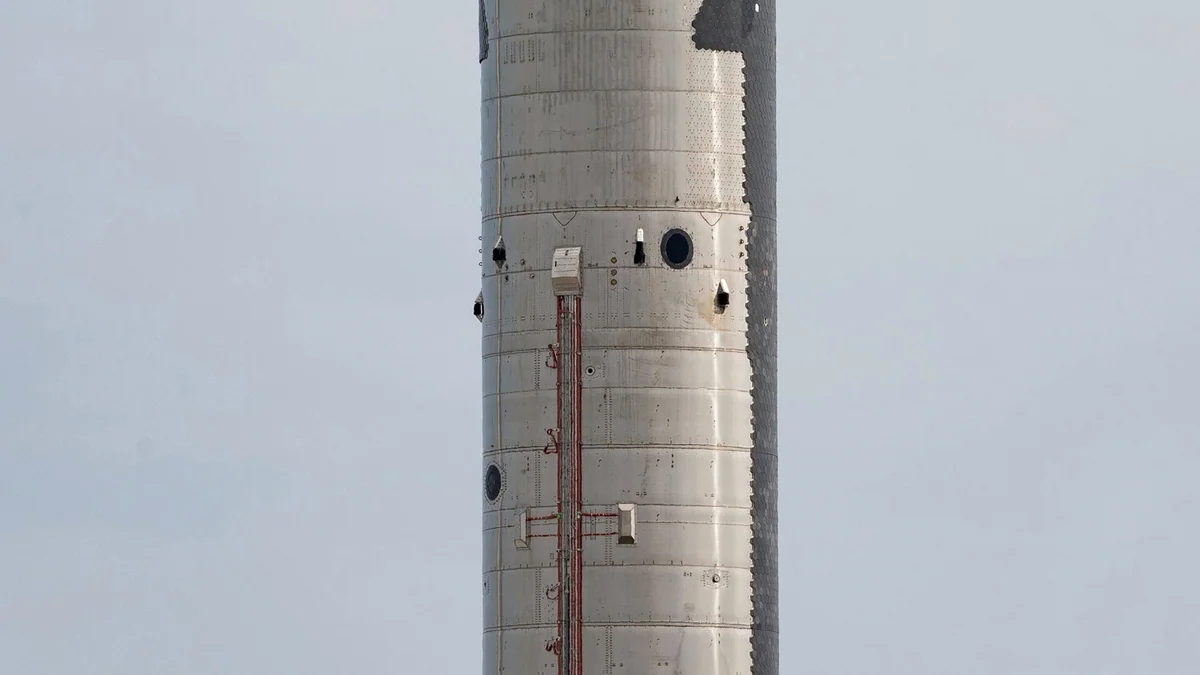
A century ago, if you had told a physicist that we would one day build a skyscraper-sized needle of stainless steel and hurl it at the sky, they would have likely walked you to the door. At that time, spaceflight wasn't just difficult; it was considered mathematically impossible. Today, we have moved from the era where a rocket was a fragile, one-off miracle into an era where it is an industrial machine. The path to the stars is being paved with stainless steel and a healthy dose of trial and error.
On May 22, 2026, SpaceX is preparing to launch the Starship Flight 12 mission from Starbase in South Texas. This isn't just another launch. It is the debut of the Starship Version 3 (V3) upper stage and the Booster 19 carrier, launching from the brand-new Pad 2. The goal is to prove that this massive system can be entirely reusable, a feat that would change our relationship with the vacuum above us forever.
Every time a countdown pauses, as it did for millions of viewers on May 21, 2026, we are reminded of a fundamental truth: we are building a machine that sits at the very edge of our current capabilities. A delay isn't a failure; it's a conversation with the laws of physics.
The Iceberg Beneath the Launchpad
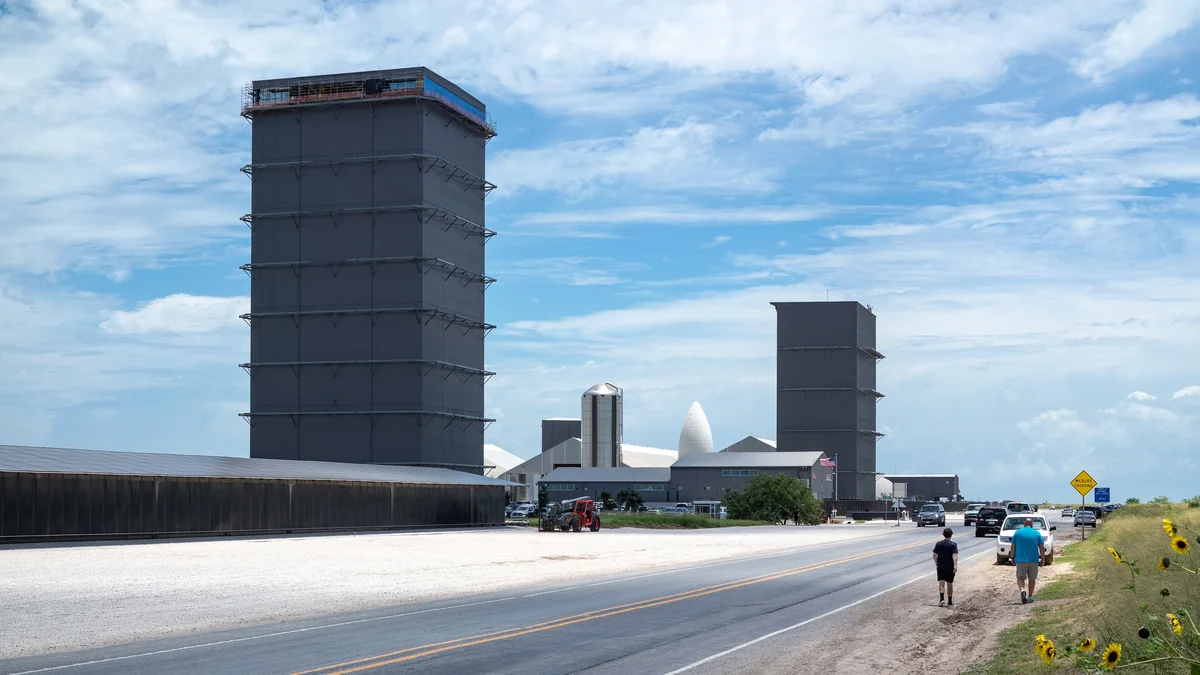
Sometimes, the most profound lessons are hidden in the details we can't see from the spectator stands. Before this flight could happen, a methane gas generator exploded at the new Pad 2, forcing engineers back to the drawing board. This generator provides high-pressure nitrogen to the cooling system—the invisible plumbing that prevents the launchpad from simply melting under the roar of the world's most powerful engines.
To understand the scale of this, imagine a showerhead that must dump an entire Olympic-sized swimming pool's worth of water in a single second. That is what it takes to dampen the sound and heat of a Starship launch. The explosion was a reminder that the ship itself is only the tip of the iceberg. The infrastructure beneath it is just as complex and just as susceptible to the whims of nature.
Now hold that thought. The Version 3 (V3) ship represents the next step in this evolution. It features a longer fuselage and larger fuel tanks, designed to carry significantly more cargo into orbit. The objective is to shift space travel from a rare, historic event into a matter of routine logistics.
The Ladder of Understanding: Testing Reusability
Why do we need another test flight? The answer lives in a single word: reusability. Starship Flight 12 is a suborbital test—a controlled hop designed to see how this new hardware behaves when it hits the atmosphere at thousands of miles per hour.
Here is how the mission breaks down, rung by rung:
- The Ascent of Booster 19: The Super Heavy booster lifts the ship, creating visible shockwaves in its exhaust trail.
- The Vacuum Restart: Ship 39 will attempt to relight a single Raptor engine while in the void. This is the "aha" moment for any future Mars mission; if you can't restart your engine in space, you aren't coming home.
- The Flap Maneuver: Engineers are watching the newly designed control flaps to see if they can steer the ship during its descent.
- The Catch Prep: Every second of data from Booster 19 is a lesson for future attempts to catch the booster out of mid-air with mechanical arms.
Science is a process where we must be willing to be "gloriously wrong" today so that we can be slightly less wrong tomorrow.
Physics in the Fire, Logic in the Code
One of the most striking sights in recent tests has been the pattern of shockwaves following the Super Heavy booster. When gases exit the engine at supersonic speeds, they have to adjust to the surrounding air pressure. These visible waves—known as "Mach disks"—are like the lungs of the rocket engine, breathing fire as they find their balance.
But while SpaceX is taming steel and fire, a second revolution is happening in the code. Research recently published on the MOSS system highlights autonomous agents capable of repairing their own software bugs. MOSS has significantly improved error-correction capabilities, which is a critical step in the evolution of self-sustaining technology.
Why does this matter for space? Because when we eventually head for Mars, we won't be bringing an army of IT specialists with us. We need systems that can adapt and heal their own code when unexpected errors occur millions of miles from the nearest help desk.
From Science to Global Spectacle
In the past, spaceflight belonged to a small circle of scientists in lab coats. Today, it is part of our shared culture. When a launch is delayed, it isn't just the engineers who feel the tension; it's millions of fans worldwide. Starship has become an event that competes for attention with major sporting finals and stadium concerts.
This cultural shift is reflected in the economics, too. Analysts suggest that if SpaceX were to go public, its market value could reach $2 trillion. We are watching the birth of a platform that is simultaneously a staggering technical achievement and a global financial dream.
| Mission Detail | Value / Description |
|---|---|
| Mission | Starship Flight 12 |
| Date | May 22, 2026 |
| Launch Time | 17:30 CT (22:30 UTC) |
| Hardware | Starship V3 & Booster 19 |
| Launch Site | Starbase, Pad 2 |
| Primary Goal | V3 Validation & Reusability |
Every time Starship leaves the ground, we are answering a silent question: "Can we actually do this?" We are a species that looks at the horizon and demands to know what lies beyond it. SpaceX has turned that ancient human desire into an engineering process where failure is simply a data point on the road to success.
We still don't know if Flight 12 will achieve every one of its goals or if the booster will make a perfect landing. That, honestly, is the best part. Science is a journey where we learn from every explosion and every successful second in the vacuum. This human stubbornness, wrapped in stainless steel, is what opens the door to new worlds.