Current pocket money trends in Estonia reveal a striking divergence: while Estonian students utilize world-class payment technology, their actual purchasing power remains constrained by a regional wage gap. In 2026, older students navigate their economic lives with an average of just 18 € per month—a figure significantly lower than their Nordic counterparts.
This friction between a high-tier digital infrastructure and modest material liquidity serves as the central axis for the financial behavior of Estonia’s youth. As we move through 2026, the landscape is being reshaped by a projected minimum wage increase to 900–1,000 € and the near-total displacement of physical currency by mobile transactions. While a surge in retail investor activity fosters a new brand of financial literacy, household budgets remain under pressure from the aftershocks of inflation and new tax obligations. Traditional spending models are being rewritten into an emerging paradigm of data-driven, real-time transactions.
Institutional Behavior and the Minimum Wage Blueprint
The Estonian socio-economic system is increasingly defined by European mandates that demand greater transparency. While the Estonian Trade Union Confederation and the Estonian Employers' Confederation continue to negotiate the minimum wage through social dialogue, the process is now heavily influenced by the EU Minimum Wage Directive. This institutional shift requires member states to ensure an adequate standard of living that reflects real purchasing power.
If the minimum wage reaches the forecasted 900–1,000 € range in 2026, then the residual disposable income for families will fundamentally shift. This is not merely a statistical adjustment; it is a rewriting of the social contract. As the floor rises, so does the societal expectation of what constitutes a sufficient sum for a young person’s first independent economic decisions. This alignment is an inevitable part of the elatustase (standard of living) convergence within the European Union.
Fintech as a Behavioral Catalyst
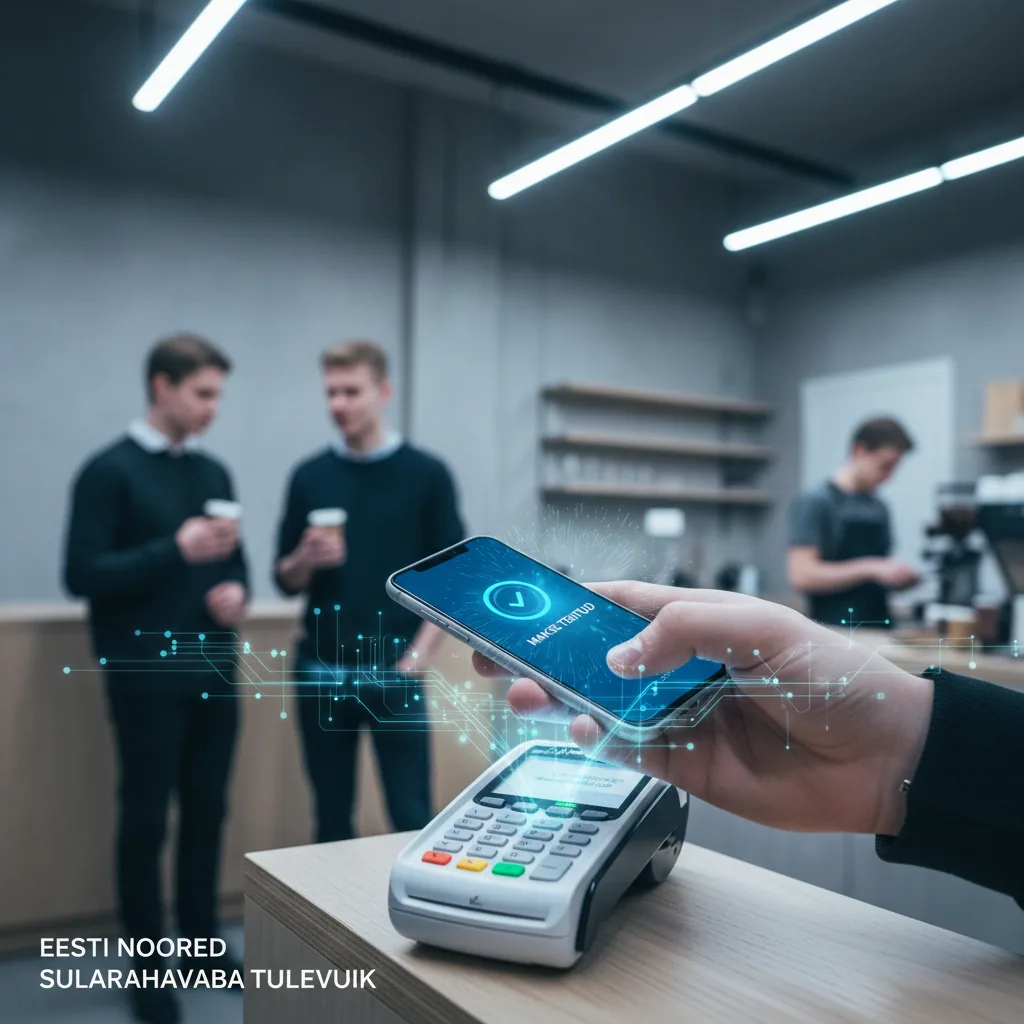
Data from 6Wresearch indicates that the mobile payment market in Estonia is experiencing exponential growth, allowing the younger generation to conduct their lives entirely without tactile currency. This transition represents a profound behavioral shift: money is losing its physical weight and becoming an abstract data flow. According to the Bank of Estonia, fewer than one in ten residents now remain persistent users of cash.
However, a curious cross-border correlation is emerging—the "cash paradox." Despite the dominance of digital payments, niche data suggests that cash usage is seeing a slight resurgence in specific segments. We can hypothesize that this is a reaction to digital traceability or a strategic attempt to maintain spending control in an environment where "invisible" money tends to vanish faster. Furthermore, a secondary market has emerged for collectors, where items like the 2017 Estonian 1-cent coin have acquired value far beyond their face amount.
Economic Indicators and Household Resilience
The start of 2026 marks a crossroads for the Estonian economy, where receding inflationary pressures meet the friction of new fiscal policies.
- Inflationary Stabilization: With the Bank of Estonia forecasting inflation to settle near 2%, household confidence should theoretically strengthen.
- Fiscal Pressure: The motor vehicle tax continues to compete directly with discretionary spending in family budgets, impacting the pool of available pocket money.
- The Credit Market: A decline in Euribor has stabilized the housing market, potentially easing the monthly financial obligations of the average household.
Table 1. Projected Shifts in the Economic Landscape (2025–2026)
| Indicator | 2025 Status | 2026 Forecast | Impact on Youth Purchasing Power |
|---|---|---|---|
| Minimum Wage | ~820 € | 900–1,000 € | Positive (Higher family budget) |
| Inflation | ~3–4% | ~2% | Neutral/Positive (Stability) |
| Euribor | Declining trend | Low stability | Positive (Lower debt service) |
| Cash Usage | < 10% | Declining | Requirement for digital literacy |
The Gen Z Paradox: High Expectations, Lean Budgets
Analysis from PwC highlights the "Gen Z Paradox": while this generation often spends less in total volume than their predecessors, their expectations for service quality and digital integration are exponentially higher. For an Estonian student, an 18 € monthly budget is not just a small sum; it is a resource to be managed with the precision of a fund manager.
"Young people understand that 18 euros saved today represents greater purchasing power in the emerging paradigm of tomorrow."
— Elisabeth Saar
Simultaneously, we see a growing appetite for investment. Data from the Financial Supervision Authority confirms a marked increase in retail pension fund assets and independent retail investments. This suggests that pocket money is no longer reserved for immediate consumption; it is increasingly diverted into securities or high-yield savings accounts.
Global Correlations and the Old Order
Estonia’s internal shifts cannot be viewed in isolation from the global stage. Central banks have recently moved to purchase over 1,000 tonnes of gold annually, signaling a pivot away from dollar-dominance and a re-evaluation of trust in global markets. Signals from the UAE regarding oil pricing in alternative currencies by 2026 suggest potential volatility in the energy sector.
In the context of Estonia’s open economy, a global slowdown in consumption triggers a chain reaction that eventually reaches our exporting industries. This directly impacts parental income and, by extension, the pocket money allocated to children. We must remain particularly observant of May 2026, when political shifts in the U.S. may induce new global cost pressures.
Digital Literacy as a Survival Strategy
In 2026, financial literacy is no longer about counting coins; it is about navigating a complex digital ecosystem. The Baltics occupy a unique position—we possess a technological lead, yet we must continue to sprint to close the economic gap with our Nordic neighbors. This requires a more conscious approach to saving and a smarter framework for consumption.
The strategic question facing the state is no longer whether a young person has enough cash, but whether they possess the skills to manage their digital identity and assets. The future of Estonia’s youth depends on their ability to integrate global macro-trends into their daily micro-decisions. As the old world order is rewritten, a systemic understanding of how global economic shifts eventually land in a child’s digital wallet is the only viable path forward.