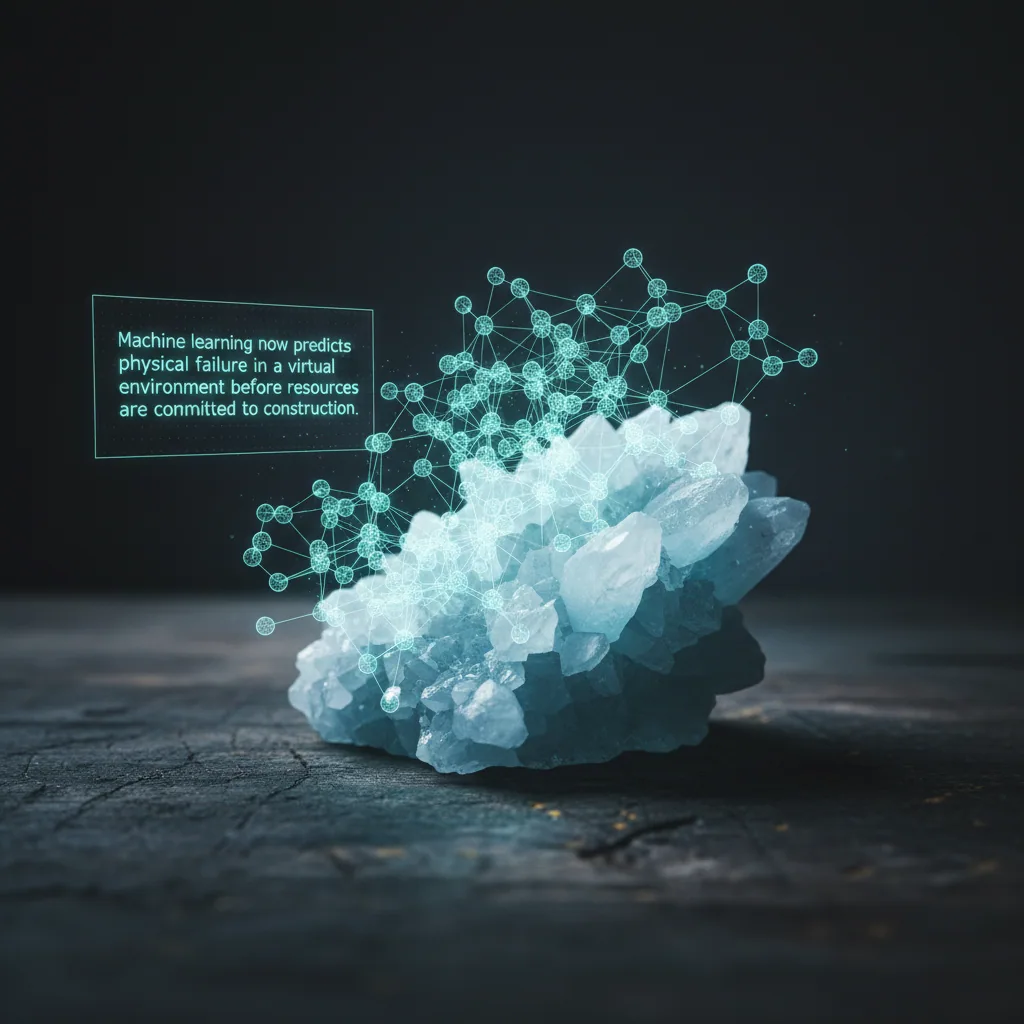
On 5 November 2025, a shift occurred in how we validate the physical world. The introduction of the LDBT framework (Learn-Design-Build-Test) signals a transition where machine learning and cell-free testing replace traditional biological cycles. This signals a global move toward synthetic validation environments where digital and biochemical simulations replace physical prototyping to ensure systemic reliability.
The Sys-tester synthetic brief documents the transition to predictive validation models that replace traditional, slow physical prototyping cycles with machine learning and digital simulations. This framework ensures that design flaws are identified in a virtual environment before a single resource is wasted on physical construction.
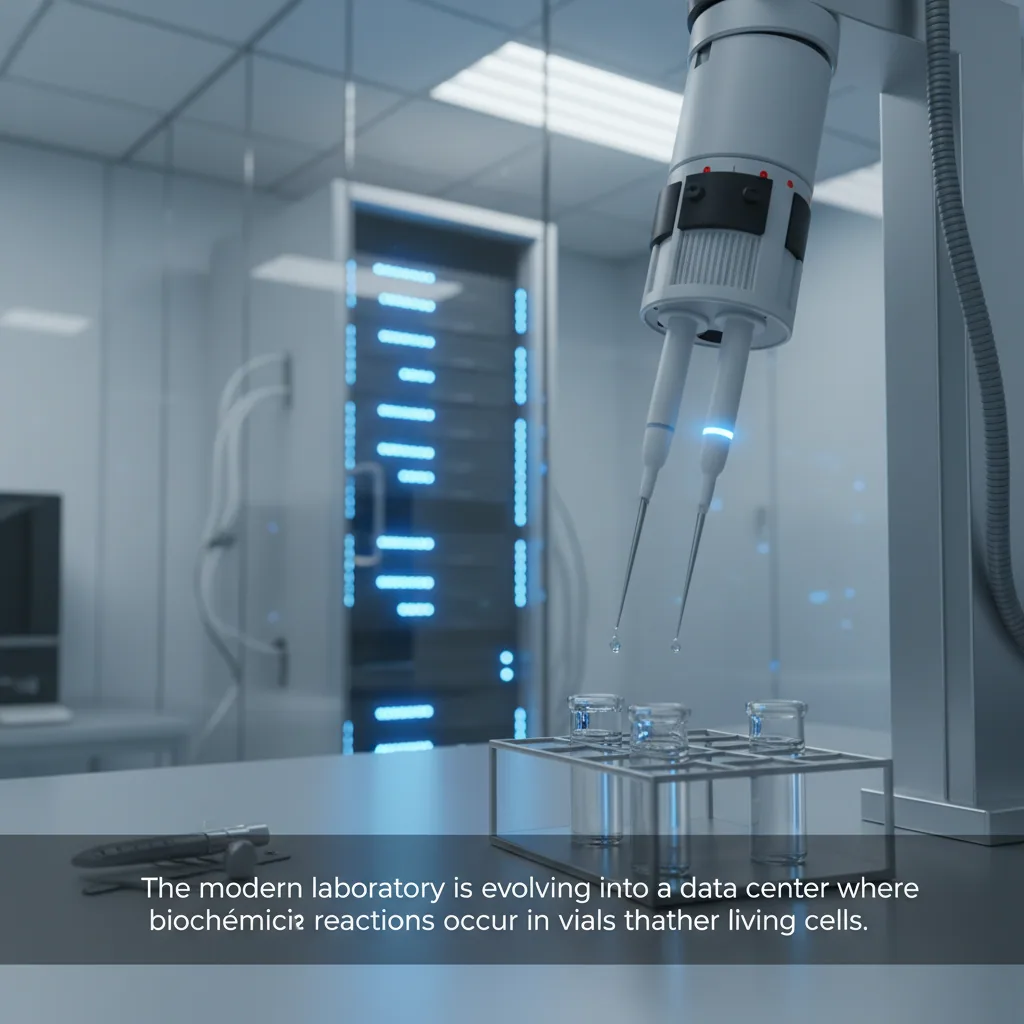
The air in the lab is filtered, dry, and precisely 21 degrees Celsius. On the bench, there are no glass vats of churning yeast or rows of petri dishes. Instead, there is the hum of a server rack and a small, clear vial containing a "cell-free" cocktail of enzymes and ribosomes.
On 5 November 2025, researchers published a paper in Nature that dismantled a century of biological protocol. They moved the "Learn" phase to the front, creating the LDBT framework. The computer predicts failure before the biological "build" even begins.
Traditional biotechnology is held hostage by the clock. You design a microbe, build it, and wait weeks for it to grow. LDBT flips this script, using machine learning to simulate millions of iterations in minutes.
The Inhuman Speed of the Synthetic Loop
The physical world is heavy and slow, but the digital world is weightless. By utilizing cell-free testing systems, researchers can bypass the metabolic "overhead" of a living organism. They are no longer growing a plant; they are running its chemical engine in a test tube.
This convergence ensures that only the most viable designs proceed to the "Build" phase. It is a move from the messy, unpredictable theater of life to a controlled, synthetic stage. The speed of LDBT is inhumanly fast compared to traditional discovery.
Machine learning models now serve as the primary sensory organ for this new science. They "see" patterns in protein folding and metabolic pathways that no human eye could discern. The transition to LDBT is a fundamental restructuring of scientific inquiry.
A Comparison of Discovery Frameworks
| Feature | Traditional (DBTL) | Synthetic-First (LDBT) |
|---|---|---|
| Primary Driver | Physical Experimentation | Machine Learning Models |
| Validation Method | In-vivo (Living Cells) | Cell-free / In-silico |
| Cycle Speed | Weeks to Months | Hours to Days |
| Resource Cost | High (Reagents, Labor) | Low (Computational Power) |
| Risk Mitigation | Late-stage discovery | Early-stage prediction |
Scarlet Dragon and the Fog of Data
Six weeks later, on 17 December 2025, the same logic was applied to the geography of conflict. The U.S. Department of War launched "Scarlet Dragon" to bridge the gap between private AI and the frontline. "Testing" is no longer a final stage but a continuous, AI-integrated loop.
In the high-altitude deserts, warfighters are tethered to sensor streams that process data in real-time. The goal is to provide actionable intelligence from chaotic streams of information. The exercise establishes a baseline for reliability that a laboratory can never replicate.
"We are moving toward a future where the distinction between 'software' and 'wetware' is a matter of substrate, not logic."
The "fog of war" is simply unparsed data in the age of synthetic validation. Scarlet Dragon focuses on system interoperability, ensuring proprietary AI communicates across military branches. Success depends on the model's ability to function in diverse atmospheric conditions.
The Architecture of Observability
This shift is rewriting the nervous system of our digital infrastructure. Engineers use "synthetic monitoring" to simulate global traffic patterns before a single real user clicks a link. New probes mimic the messy behavior of humans to identify system vulnerabilities.
These tools provide a 24/7 view of system health through digital empathy. By integrating tests with OpenTelemetry, developers get deep context into why a service failed. Synthetic data now allows for testing banking or medical systems without exposing sensitive information.
INFORMATION GAIN: The Bio-Digital Convergence
We are witnessing the birth of a unified theory of testing. The methodologies used to debug a cloud cluster are now being used to debug a metabolic pathway. This is the Bio-Digital Convergence.
- Cross-Domain Logic: The LDBT framework acts as a CI/CD pipeline for biology.
- The New Value Chain: Economic value is migrating from the physical "build" toward the predictive "model."
- Regulatory Gravity: Future viruses may be "vulnerability-scanned" like software patches.
The companies that own the most accurate synthetic testing data will dominate both the pharmaceutical and technology sectors.
Precision Engineering: The Sys-tester Synthetic Brief Perspective
The pursuit of precision eventually leads to the atom. In high-end audio and semiconductor fabrication, the "perfect signal" is a battle against heat and time. Engineers use R-2R linearity to translate bits into sound without hardware jitter.
Ultra-low jitter clocks, measuring as low as 16 ns, are the heartbeat of these systems. To a human, this sliver of time is an abstraction. To a semiconductor, it is the difference between a clean signal and a distorted mess.
Every step of fabrication—photolithography, thermal oxidation, ion implantation—requires rigorous testing. This is the "system-tester" mindset at its most extreme. Infinitesimal errors are hunted with the same urgency as forest hotspots.
The Human Element: The "Toxic" Algorithm
Systems are not just silicon; they involve us. Our relationship with AI is becoming increasingly strained, with developers viewing AI as a "toxic ex." This unpredictability creates a psychological burden on developers who must constantly verify AI work.
Reactions from the community suggest that AI efficiency comes with a psychological tax. We have outsourced the labor but doubled the cognitive load of oversight. Sustaining these systems requires more than just building them.
The Critique of "Quackademic" Integration
The tension between rigorous testing and "holistic" desire is visible in medicine. The rise of "integrative medicine" has drawn fire from those who believe science-based standards are being eroded. Critics argue that integrating reiki into academic centers undermines clinical trial definitions.
This debate centers on what constitutes "proof" in a clinical setting. While traditional medicine relies on double-blind trials, integrative medicine often relies on patient-reported outcomes. It is a fundamental conflict between measurable data and felt experience.
The Mechanics of the Stride
Our bodies are also being subjected to this systemic scrutiny. A review in Sports Med examines the relationship between stiffness and running performance. The human musculoskeletal system is treated as a series of springs and levers.
The "stiffness" of a tendon is about the efficient storage and release of energy. When a foot hits pavement, the body undergoes "dynamic deformation." Measuring these deformations allows athletes to optimize their gait for maximum efficiency.
The Spectrum of Use: Alcohol and Risk
We are redefining the "failures" of human behavior through data-driven diagnosis. The shift toward the Alcohol Use Disorder (AUD) spectrum reflects a move away from binary labels. This change in the DSM-5 reflects a more nuanced, severity-based classification.
| Metric | Risky Drinking (Men) | Risky Drinking (Women) |
|---|---|---|
| Weekly Limit | > 14 standard drinks | > 7 standard drinks |
| Single Occasion | > 4 standard drinks | > 3 standard drinks |
| Binge Threshold | ≥ 5 drinks (BAC 0.08%) | ≥ 4 drinks (BAC 0.08%) |
The Software-Defined Vehicle
This convergence arrives in our driveways with the 2026 Mazda CX-30. It is a "software-defined vehicle" (SDV) tested in synthetic simulations. The CX-30 serves as a mobile sensor suite that must distinguish between pedestrians and shadows.
For the driver, this high-stakes validation brings the logic of Scarlet Dragon to the school run. It is about the confidence that the car's "eyes" see the world exactly as it is. Reliability is now measured by the interaction between the driver and the AI.
The role of the "system-tester" is becoming the most critical vocation of our century. The LDBT cycle will continue to shorten, potentially leading to on-demand pharmaceutical manufacturing. The Sys-tester synthetic brief highlights that while we are getting better at predicting the future, the experience of reality remains distinct from the simulation.
Written by Lukas Marsh